
Ptolemaic Empire, Ptolemy I as Satrap of Egypt. 323 - 305 BC. Memphis, c. 322 - 321 BC
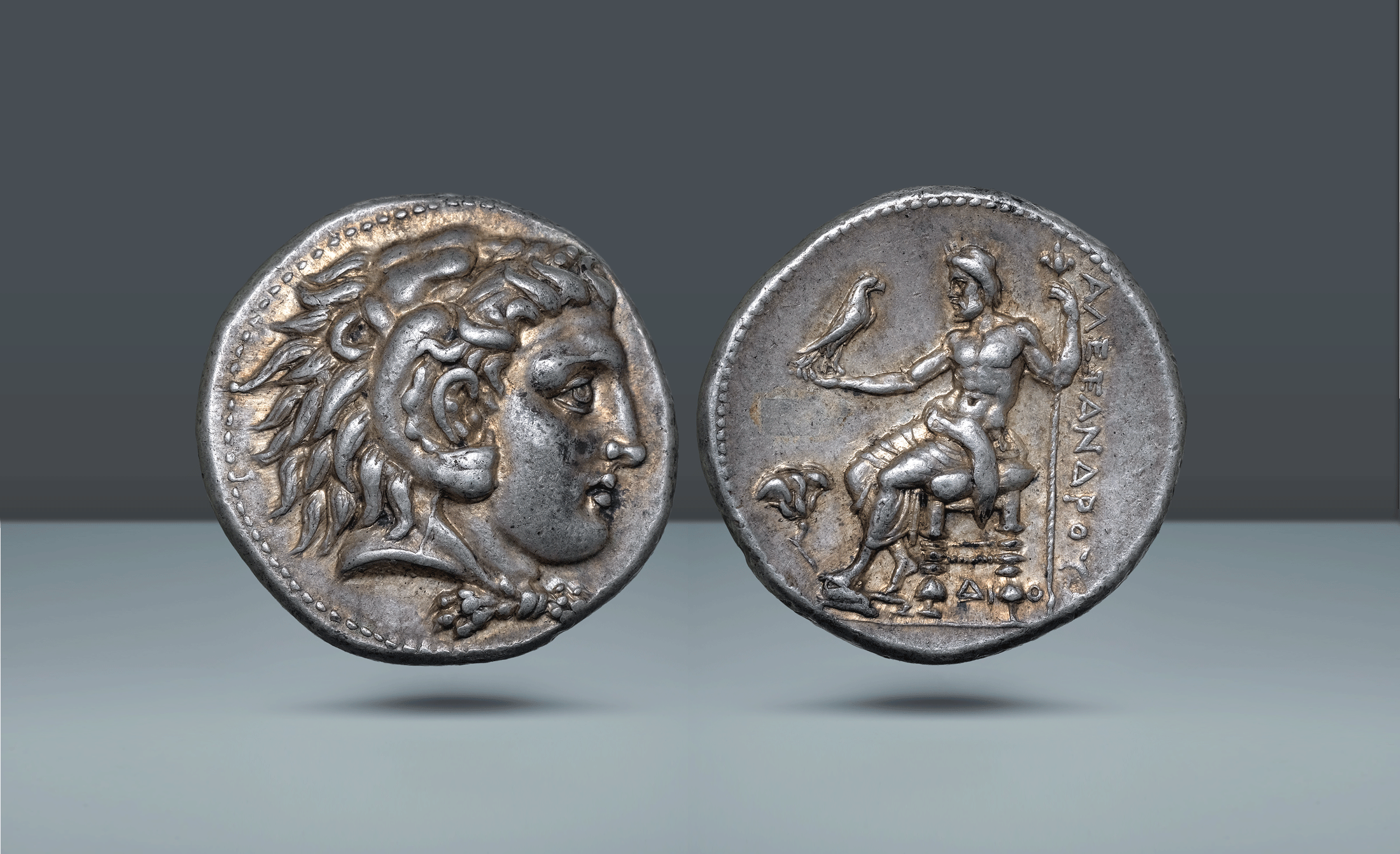
Ptolemaic Empire, Ptolemy I as Satrap of Egypt. 323 - 305 BC. Memphis, c. 322 - 321 BC
AR tetradrachm, 17.23g (26mm)
Head of the deified Alexander as Herakles r., wearing lion-skin headdress. / ΑΛΕΞΑΝΔΡΟΥ, Zeus enthroned l. with long scepter, holding eagle on his r. hand; in l. field, rose; below the throne ΔΙ-Ο.
Pedigree: Acquired from Ball, Berlin, on 13 July 1937. From the Erwin Oppenländer Collection (1901 - 1988).
References: CPE 19; Price 3971; Müller 124.
Grade: A stunning obverse portrait of Alexander in the guise of Herakles. Beautiful toned surfaces and sharply struck. Extremely detailed with some isolated minor marks. Almost Mint State
gk2246
Scroll down for more information about this coin.
When Alexander the Great died at Babylon in June 323 BC, his generals divided his empire among themselves as governors in the name of a weak-minded half-brother and an unborn son. Ptolemy, son of Lagos, had grown up with Alexander, served as one of his bodyguards, and followed him all the way to India. He chose Egypt, the richest and most defensible province of all, and ruled it at first from the ancient pharaonic capital of Memphis. He soon carried out one of the boldest moves of the succession wars. In 321 BC, as Alexander's funeral cortege traveled toward Macedon, Ptolemy intercepted it and brought the king's embalmed body to Egypt. Possessing the conqueror's corpse gave him legitimacy no rival could match. When the regent Perdiccas invaded Egypt to punish him, the campaign failed disastrously on the Nile, and Perdiccas was murdered by his own officers.
This tetradrachm was struck during exactly those years. Ptolemy was still only a satrap and kept to the familiar imperial coinage. The coin carries the name ΑΛΕΞΑΝΔΡΟΥ, the head of Herakles in his lion-skin, and the enthroned Zeus holding his eagle, the types that had become the international currency of the Hellenistic world. Herakles was the legendary ancestor of the Macedonian royal house, and in the hands of Alexander's die engravers his idealized features were increasingly taken to suggest the young king himself. In Ptolemy's Egypt, where Alexander was soon worshipped as a god, the resemblance had special force. Within a few years Ptolemy would go further and replace Herakles with an openly deified Alexander wearing an elephant scalp. That was a striking break, and this issue comes from the moment just before it.
The rose in the left field and the letters ΔΙ-Ο below the throne mark this as one of Ptolemy's earliest issues. C. Lorber's Coins of the Ptolemaic Empire places it at Memphis, though the mint question is still debated. CNG has noted that although Lorber, in CPE, attributes the initial issues to Memphis, the question remains open. Struck in high relief on a full Attic-weight flan, this example has an obverse portrait of exceptional sculptural quality and sharp detail throughout the reverse. Its provenance goes back nearly ninety years, to a purchase from the Berlin firm of Ball in July 1937 for the collection of Erwin Oppenländer. A superb coin from the founding years of the last great dynasty of Egypt