Mysia, Cyzicus. c. 550-450 BC
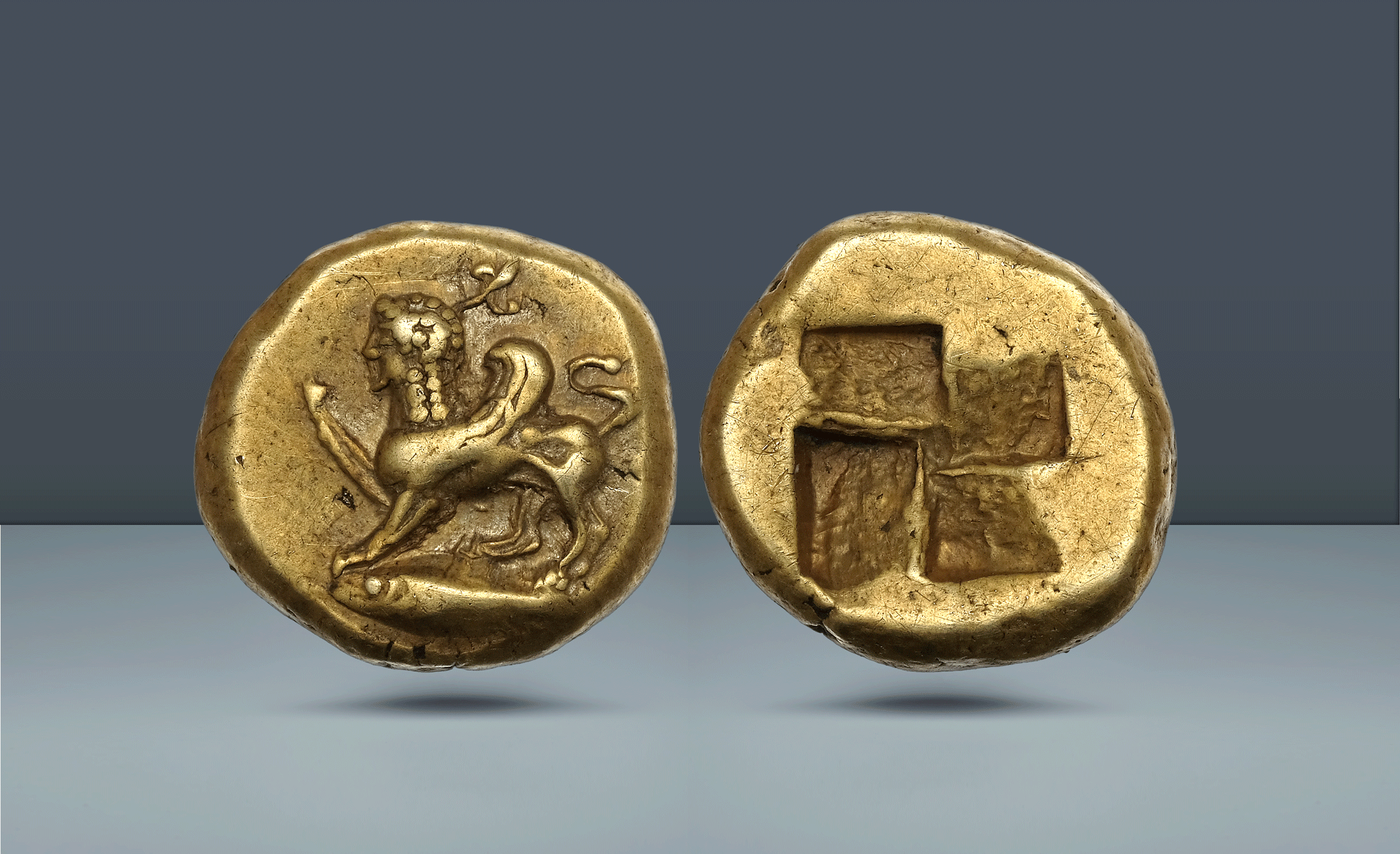
Mysia, Cyzicus. c. 550-450 BC
EL Hekte, 2.70g (11mm, na)
Sphinx with curved wing, raising right forepaw, crouching left on tunny left / Quadripartite incuse square.
Pedigree: Ex Classical Numismatic Group 103, 14 September 2016, lot 206
References: Von Fritze I 127; cf. Boston MFA 1456 (stater); CN Online Type –; HGC 8, 341
Grade: Nicely toned but with a few minor marks. aEF
gk2210
Scroll down for more information about this coin.
Few cities of the ancient world were so perfectly placed for commerce as Cyzicus. Founded by colonists from Miletos on the southern shore of the Propontis, the modern Sea of Marmara, it sat astride the sea route linking the Aegean with the Black Sea, through which flowed the grain, fish, timber, and slaves of the Pontic coasts. Out of that position grew one of the most remarkable coinages of antiquity. For roughly two centuries, Cyzicus struck electrum staters and their fractions in enormous quantities, and these "Cyzicenes" became the standard trade currency of the Black Sea region and beyond. Their reputation is preserved in Xenophon's Anabasis, where the Greek mercenaries returning from Persia are promised pay reckoned at a Cyzicene per man per month, a measure of how naturally the coin served as a unit of value far from the city that issued it.
The defining feature of the Cyzicene series is the astonishing variety of its obverse designs. Hundreds of different types are known, drawn from myth, religion, and the animal world, and they appear to have changed regularly, perhaps with each issuing magistrate or minting period. The one constant is the tunny fish, the badge of Cyzicus, which runs beneath nearly every type as a reminder of the great tuna migrations through the Propontis that underpinned the city's wealth. Here the tunny supports a crouching sphinx, its wing curving upward in the elegant manner of archaic East Greek art, one forepaw raised in a pose of alert watchfulness. The same type is known on the stater denomination, as the Boston example shows, but on a hekte, one-sixth of the stater, the engraver's achievement is all the more striking for the small scale on which it was executed.