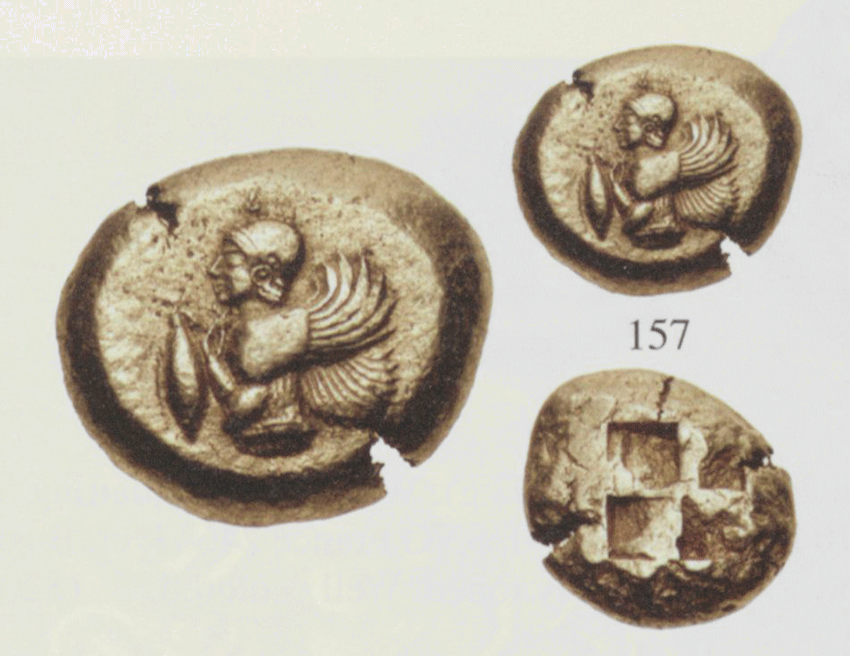
Mysia, Cyzicus. c. 550-450 BC
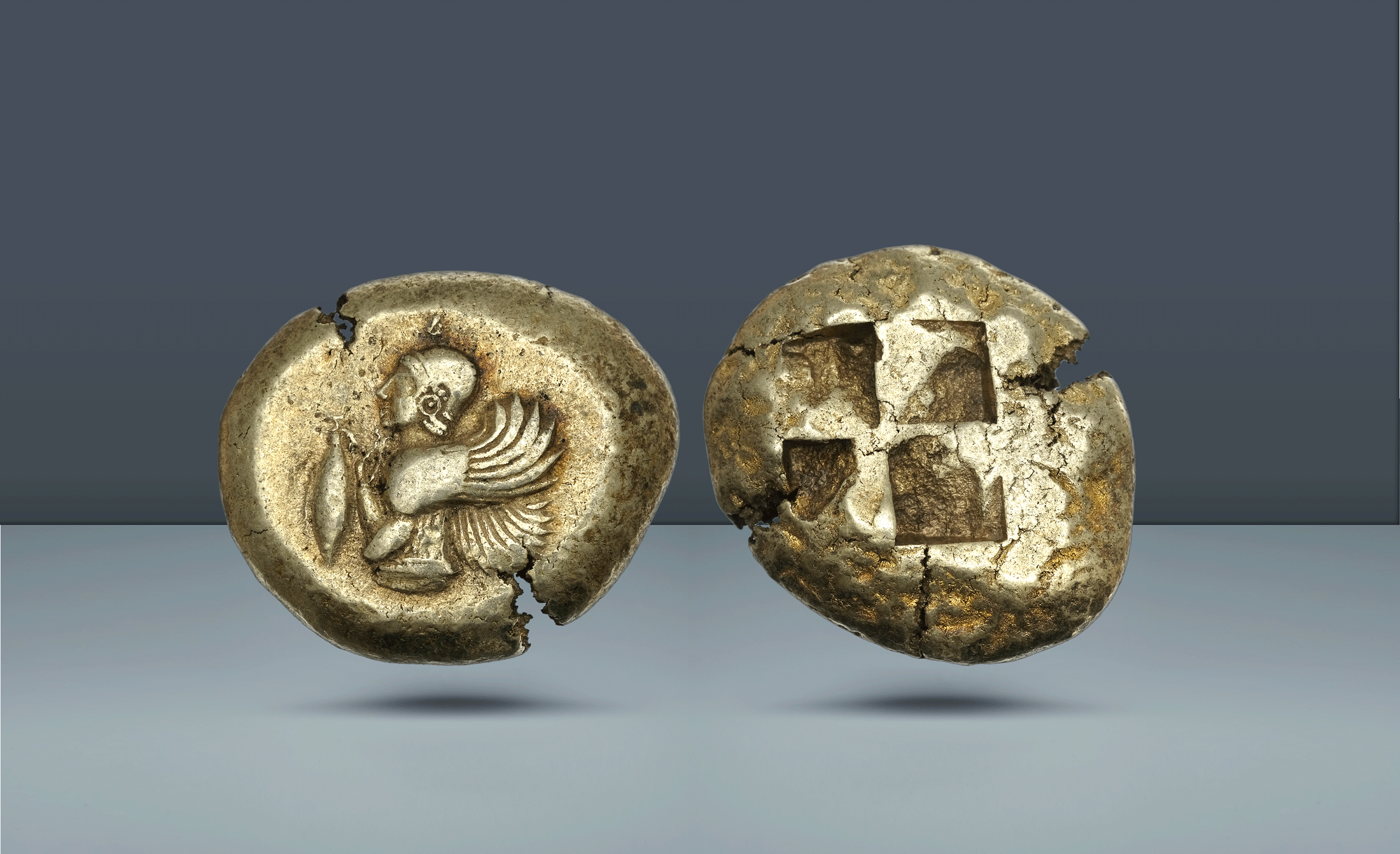
Mysia, Cyzicus. c. 550-450 BC
EL Stater, 16.18g (20mm, n/a)
Half length bust of winged female figure (Harpy?) to l., touching her chin with her left hand, and holding tunny in her r. / Quadripartite incuse square
Pedigree: Ex CNG Triton XIX, 5 Jan 2016, lot 157
References: Von Fritze I 75; Boston MFA 1448 = Warren 1519; CN Online Type –; HGC 8, 108
Grade: Lightly toned. VF
gk2207
Scroll down for more information about this coin.
Harpies, or Harpyiai, take their name from the Greek verb "to snatch." In the earliest sources they were personifications of storm winds rather than monsters. Hesiod's Theogony makes them daughters of Thaumas and the Oceanid Electra and names two, Aello and Ocypete. Later writers added Celaeno. When a man was lost at sea and no body was recovered, the Greeks said the Harpies had taken him.
While the Harpies are usually treated as a mainland myth, Anatolia played a central role in shaping them. Ancient commentators connected Pandareus with Miletus. In Book 20 of the Odyssey, Penelope recalls how the Harpies seized her daughters just before their marriages and gave them to the Furies as servants. As a result, one of the earliest Greek depictions of death as abduction originates in the eastern Aegean.
The strongest archeological evidence is the Harpy Tomb at Xanthos, built around 480–470 BCE for a local ruler. Its frieze shows winged bird-women carrying small human figures, most likely souls of the dead. The reliefs are currently held in the British Museum. Scholars still disagree on whether the figures are Harpies or Sirens. Regardless, the tomb shows Lycian elites blending Greek imagery with older Near Eastern traditions of winged spirits who escorted the dead.