
Mysia, Cyzicus. c. 550-450 BC
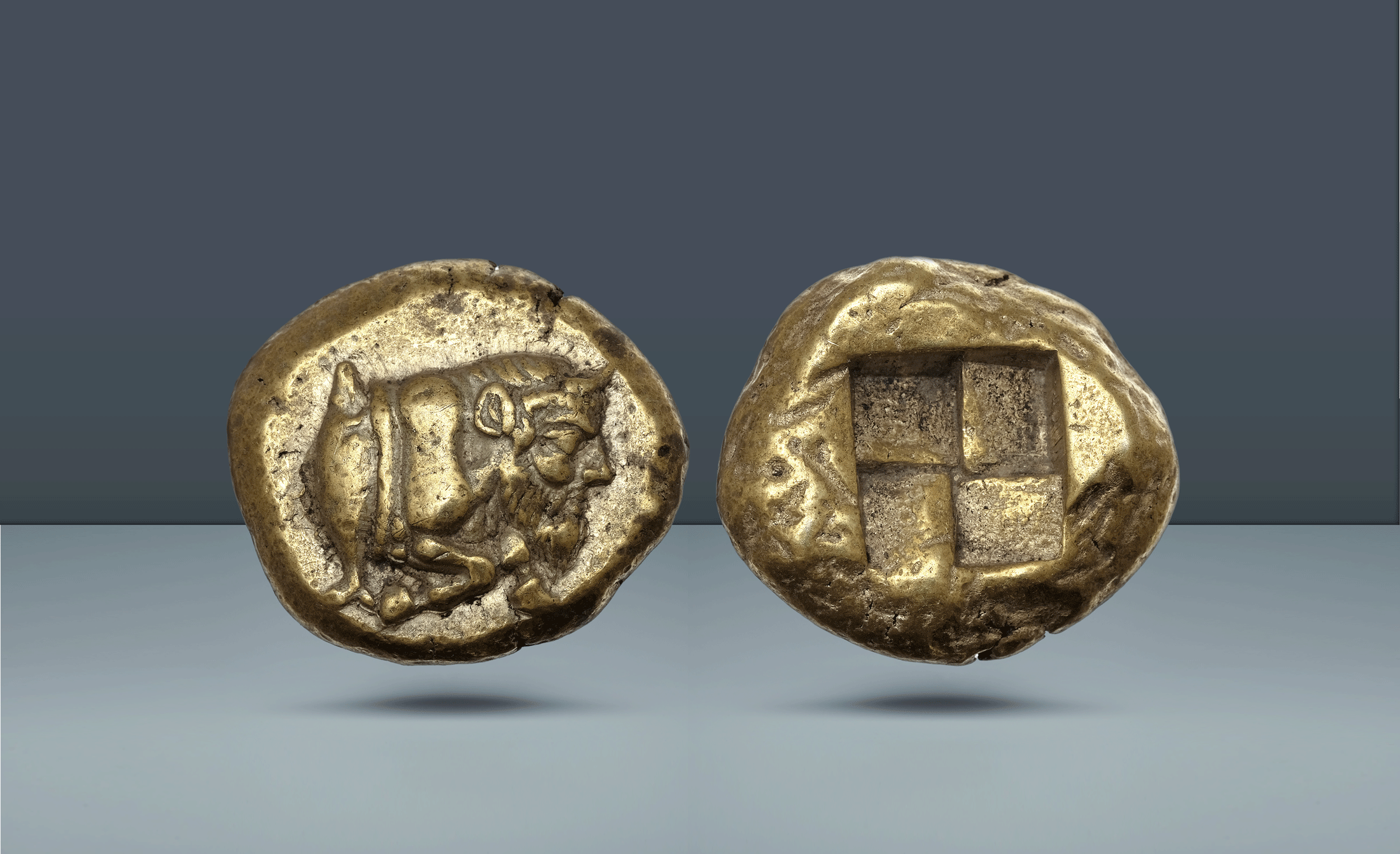
Mysia, Cyzicus. c. 550-450 BC
EL Stater, 16.03g (20mm, n/a)
Forepart of man-headed bull / Four part square incuse
References: Von Fritze I 174; Greenwell 51; Boston MFA 1491 = Warren 1468; CN Online Type –; HGC 8, 198
Grade: Rare and in superb condition. EF for issue
gk2205
Scroll down for more information about this coin.
This electrum stater of Cyzicus, dating to approximately 550–450 BC, depicts the forepart of a man headed bull with a tunny fish below. In Greek religion, rivers were frequently personified as gods, sometimes represented as bulls with human heads. These deities were associated with the fertility of the land and the importance of rivers to the communities that depended upon them. One of the most known examples appears on the coinage of Gela in Sicily, where the man headed bull represents Gelas, the river god from whom the city took its name. Although the imagery is similar, the identity of the man headed bull on this stater remains uncertain.
The tunny fish beneath the bull is the identifying symbol of Cyzicus. Its location along the maritime routes connecting the Aegean and Black Seas gave the city access to important commercial networks. The waters surrounding Cyzicus were also known for their seasonal migrations of tuna, which supported a valuable fishing industry. The tunny appears alongside a wide variety of mythological figures, animals, and religious subjects on the city's electrum coinage.
Cyzicus was one of the most important producers of electrum coinage in the ancient Greek world. Its staters circulated throughout the Aegean and Black Sea regions and were referred to as Cyzicenes in ancient sources. Although the designs of these coins varied considerably, the tunny fish remained a consistent identifying feature throughout the series.