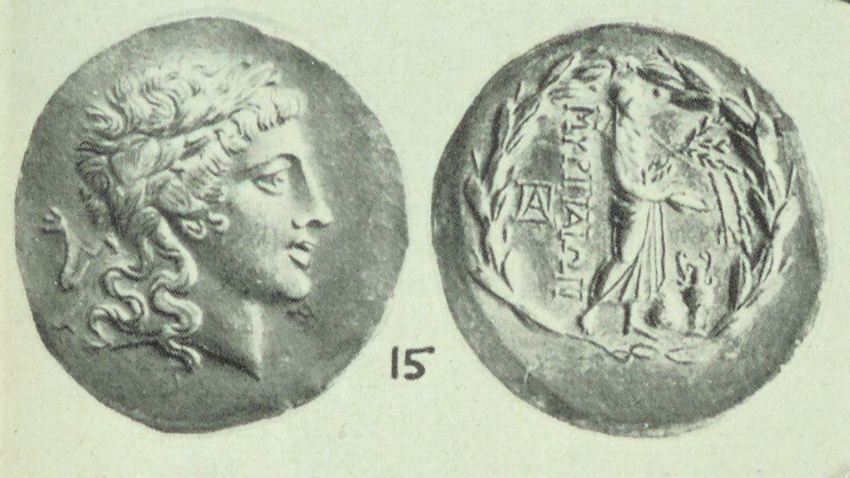
Mysia, Myrina. c. 160-140 BC
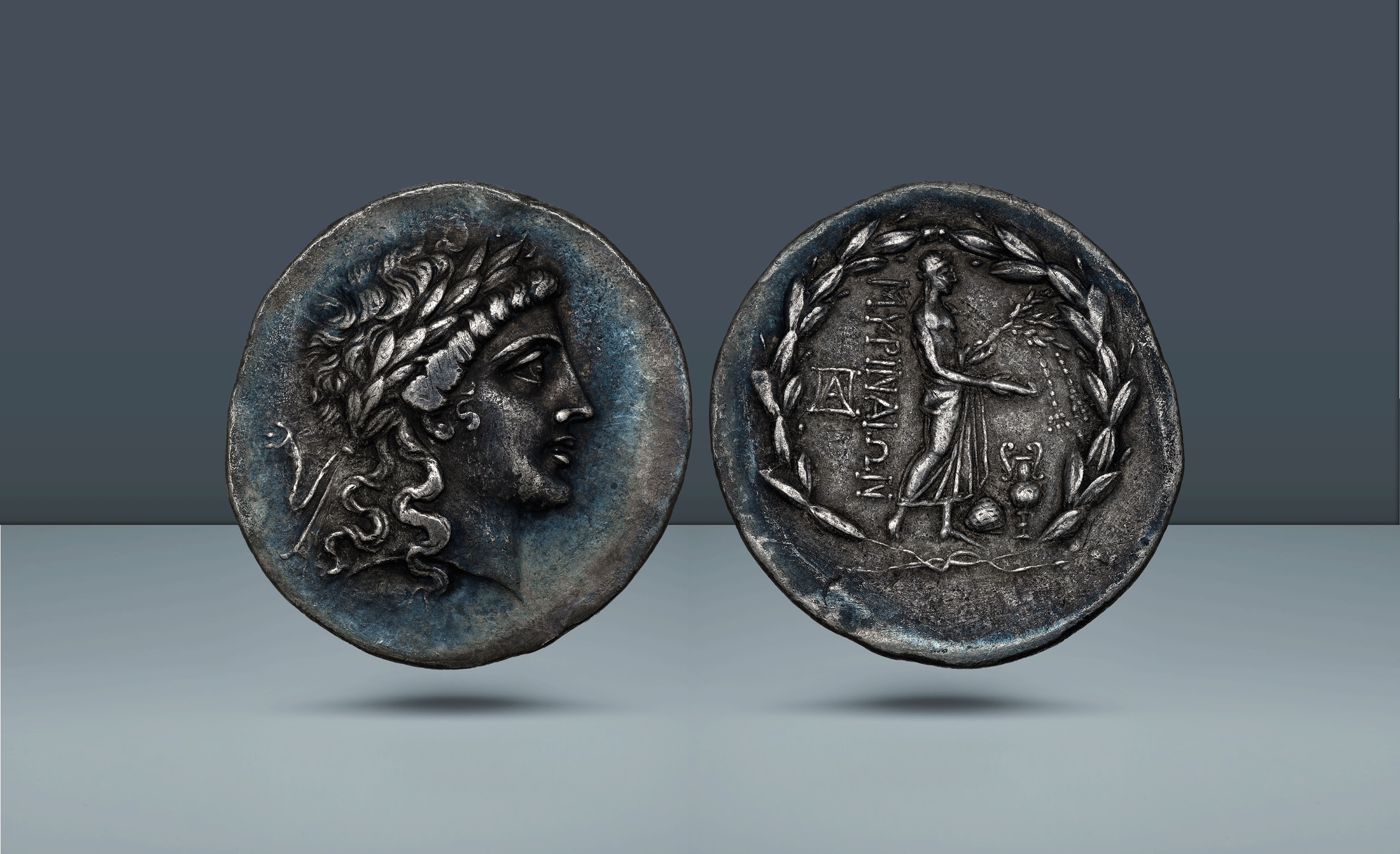
Mysia, Myrina. c. 160-140 BC
AR Stephanephoric Tetradrachm, 15.11g (33mm, 12h).
Laureate head of Apollo r., hair falling down neck in thick curls. / MYPINAIΩN Apollo, wearing himation, nude to waist, standing r., holding in his l. hand filleted laurel branch, patera in his r. hand; at his feet, omphalos, in front, double handle amphora; in outer l. field, monogram; all within laurel wreath
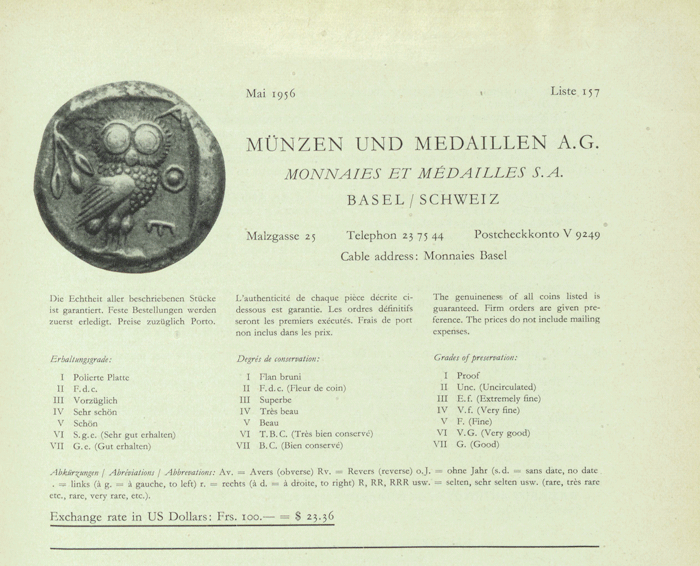
Pedigree: From an old Swiss collection started in the 19th century. Münzen und Medaillen AG, Basel - Fixed Price List 157 (1956), 15.
References: K.S. Sacks, ANS MN 30, 42, issue 45 / 89f (this specimen, illustrated on pl. 21); BMC 135, 2.
Grade: Illustrated in the Sacks article for the ANS Museum Notes and from a FPL of M&M Basel in 1956. Some overall light wear but with incredibly nice toning and a large flan. Toned VF+/aEF
gk2186
Scroll down for more information about this coin.
The wreathed tetradrachms of Asia Minor emerged in the middle decades of the second century BC, and the political opening for them is clear enough. Rome broke Antiochos III at Magnesia in 190, and the Peace of Apamea two years later stripped the Seleukids of everything north and west of the Taurus. Territory went to Pergamon and Rhodes; a number of cities came out of the settlement with their freedom formally recognised. Civic silver on the Attic standard, struck on a broad flan and signed by local magistrates, was one way to say so.
What is less clear is where the design idea came from. There are two competing theories
One is the cistophorus. Pergamon's reduced-weight silver, closed to outside currency, carries its type inside an ivy wreath and predates most of the Aeolian and Ionian issues. On this reading the free cities borrowed a Pergamene visual convention while pointedly rejecting the Pergamene weight standard - an international coin dressed in a regional idiom. The other is Athens. The New Style tetradrachms place the owl and amphora in an olive wreath on a comparably spread flan. Whether they came first depends on a chronology that has moved considerably: Margaret Thompson put the start around 196 BC, while Mørkholm and others brought it down to roughly 165 BC, tied to Athens receiving Delos. Push the date late and Athens joins the fashion rather than starting it.
Regardless of the origin, the wreath's meaning is probably festival-related. Several issuing cities had recently secured Panhellenic recognition for their games, and a crown is what those games awarded. It fits the timing without accounting for every issue.