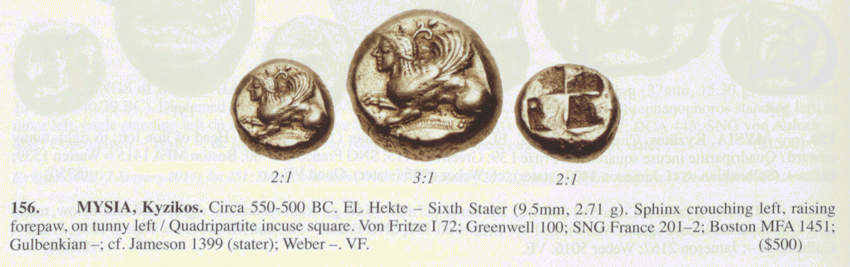
Mysia, Cyzicus. c. 550-450 BC
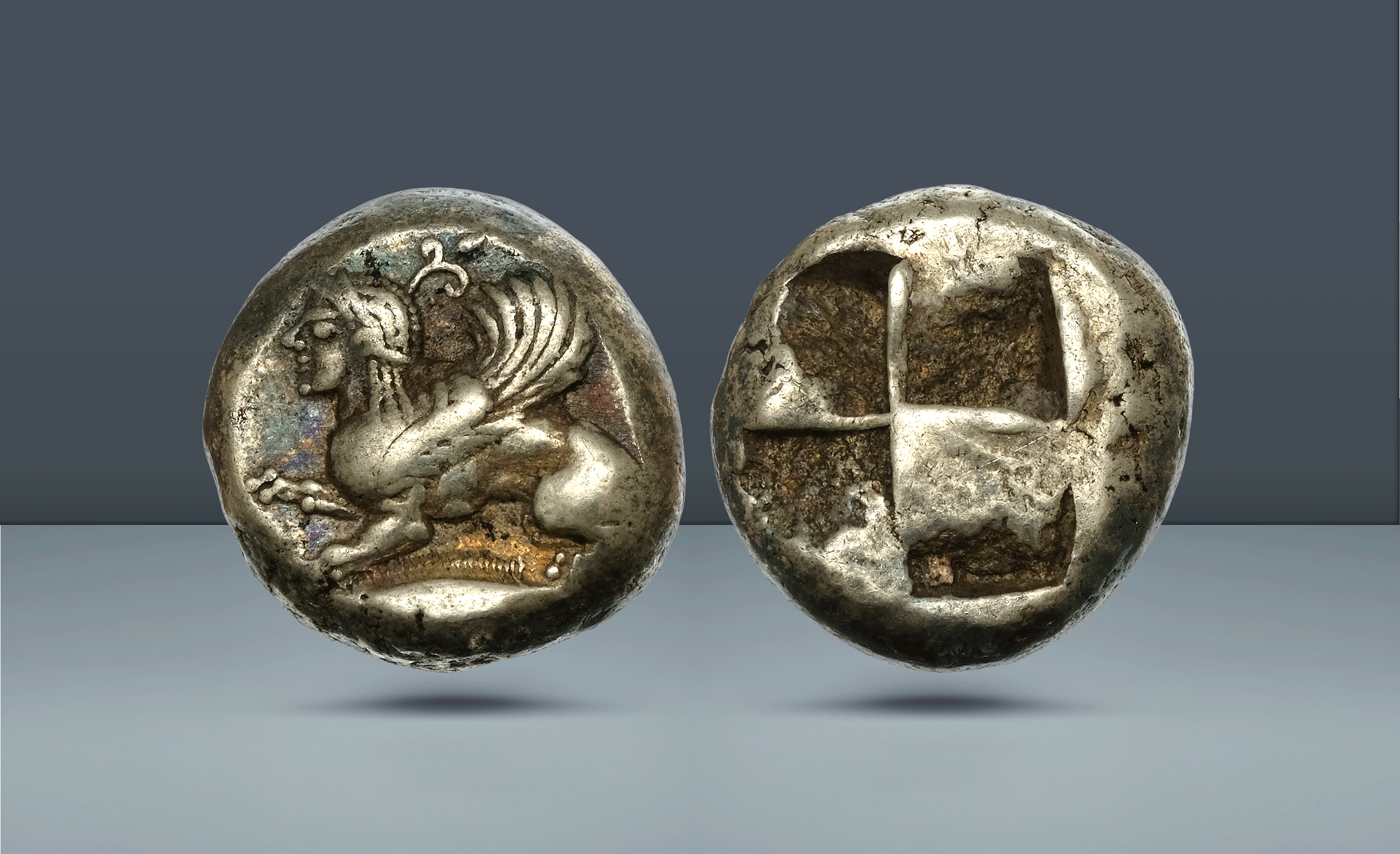
Mysia, Cyzicus. c. 550-450 BC
EL Hekte or Sixth Stater, 2.72g (9.5mm, n/a)
Sphinx with curved wing, raising right forepaw, crouching left on tunny left / Quadripartite incuse square
Pedigree: Ex CNG Triton XIX (5 January 2016), lot 156
References: Von Fritze I 72; Boston MFA 1451; CN Online Type 11426; HGC 8, 296
Grade: Lovely iridescent toning. Minor wear and aEF
gk2209
Scroll down for more information about this coin.
This electrum stater from Cyzicus shows a sphinx crouching left, wings curled and right forepaw raised. A fillet binds her beaded hair, a flower rises from the top of her head, and below her swims a tunny, the city's badge. The sphinx began in Egypt as a male symbol of royal power and reached the Aegean by way of the Near East. The Greeks reshaped it into a winged female creature and made it far more dangerous. In Theban myth the sphinx sat outside the city and killed anyone who failed to answer her riddle, until Oedipus solved it. In Archaic Greece she was above all a guardian of the dead and the sacred. Sphinxes crowned Attic grave markers and topped votive columns, most famously the Naxian Sphinx dedicated at Delphi around 560 BCE. Anatolia had its own long tradition. The Hittites set sphinxes at the gate of Alaca Höyük in the second millennium BCE, and winged sphinxes were common in Phrygian and Lydian art. The Ionian Greek cities took up these influences, and sphinxes became a fixture of local pottery and metalwork. Chios went so far as to adopt the seated sphinx as its civic emblem. As a Milesian colony tied to both Ionia and the Anatolian interior, Cyzicus inherited both strands of this tradition.