
Nordic Region. Viking, . Anonymous, c. 6th century AD
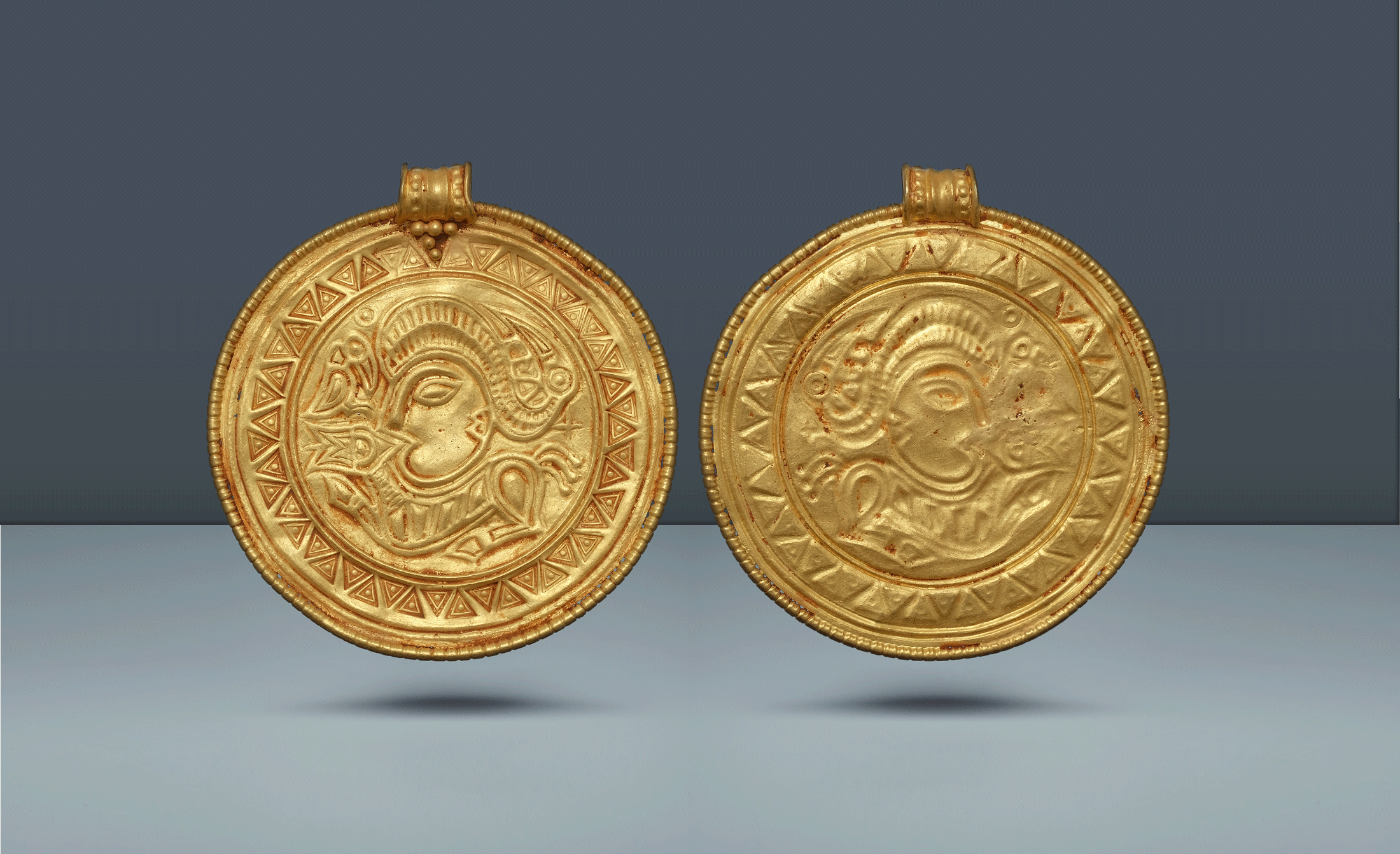
Nordic Region. Viking, . Anonymous, c. 6th century AD
AV Bracteate Pendant, 12.1g (52mm, ).
Stylized bust left (Possibly the god Odin) seated on a horse; bird with long beak in front. Intricate, orderly ornate border / Incuse of obverse. Ancient gold bezel.
Pedigree: Private Collection, Germany, acquired prior to 1970; R. Bussey Collection, acquired prior to 1983
References: For a similar style bracteate, Metropolitan Museum of Art, Object# 2001.583 (Gallery 301). https://www.metmuseum.org/art/collection/search/473485.
Grade: In pristine condition with some light reddish tinting within the gold. Mint State
gk2158
Scroll down for more information about this coin.
Bracteates play a special role as amulets; originating in Scandinavia, they spread from there to England and parts of Germany. They are imitations of Roman coins and are usually made of gold; many feature the prophylactic swastika and runes-among which the alu inscription appears particularly frequently-or birds associated with Odin’s ravens. The bracteates were stamped by dies with negative relief, as opposed to the later gold foil figures, which were made using punches. The gold used to produce the bracteates came from the Roman Empire in the form of coins, primarily solidi, which were of high value. In later times, the custom of using bracteates persisted in the practice of wearing specific coins as amulets.
The manufacture of bracteates probably originated with Roman and Byzantine portrait medallions, presented by the emperor as gifts to important figures. With their fine workmanship and allusions to the Roman and Byzantine worlds, gold bracteates conveyed both the sophisticated taste and the high social status of their owners, who wore them as fine jewelry and hoarded them as treasure.