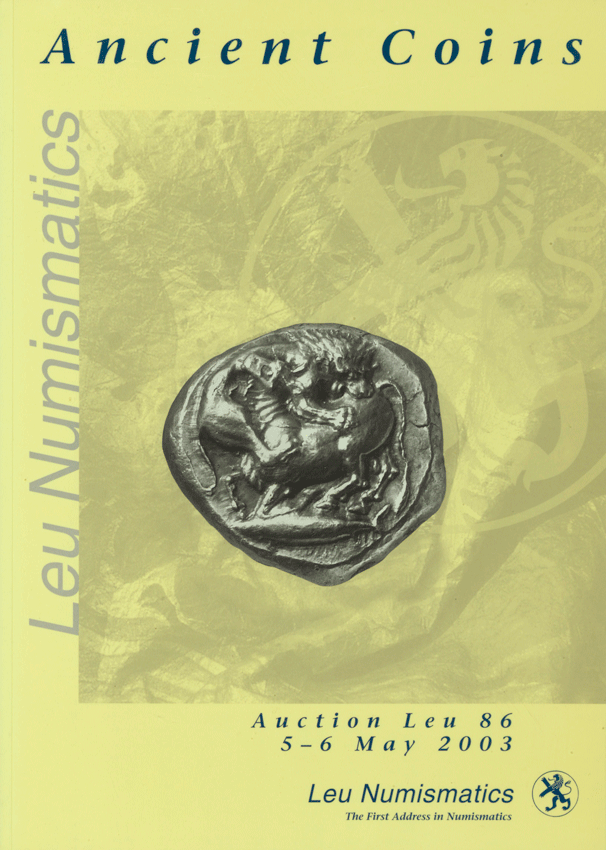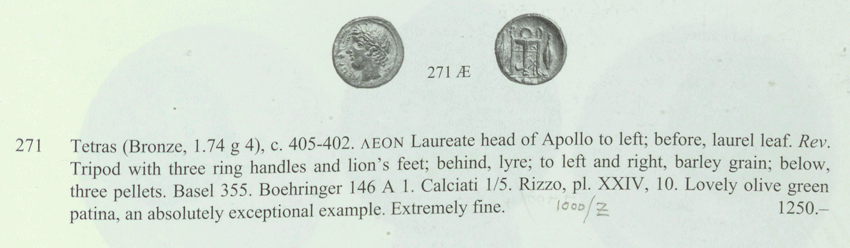
Sicily, Leontini. c. 405-402 BC
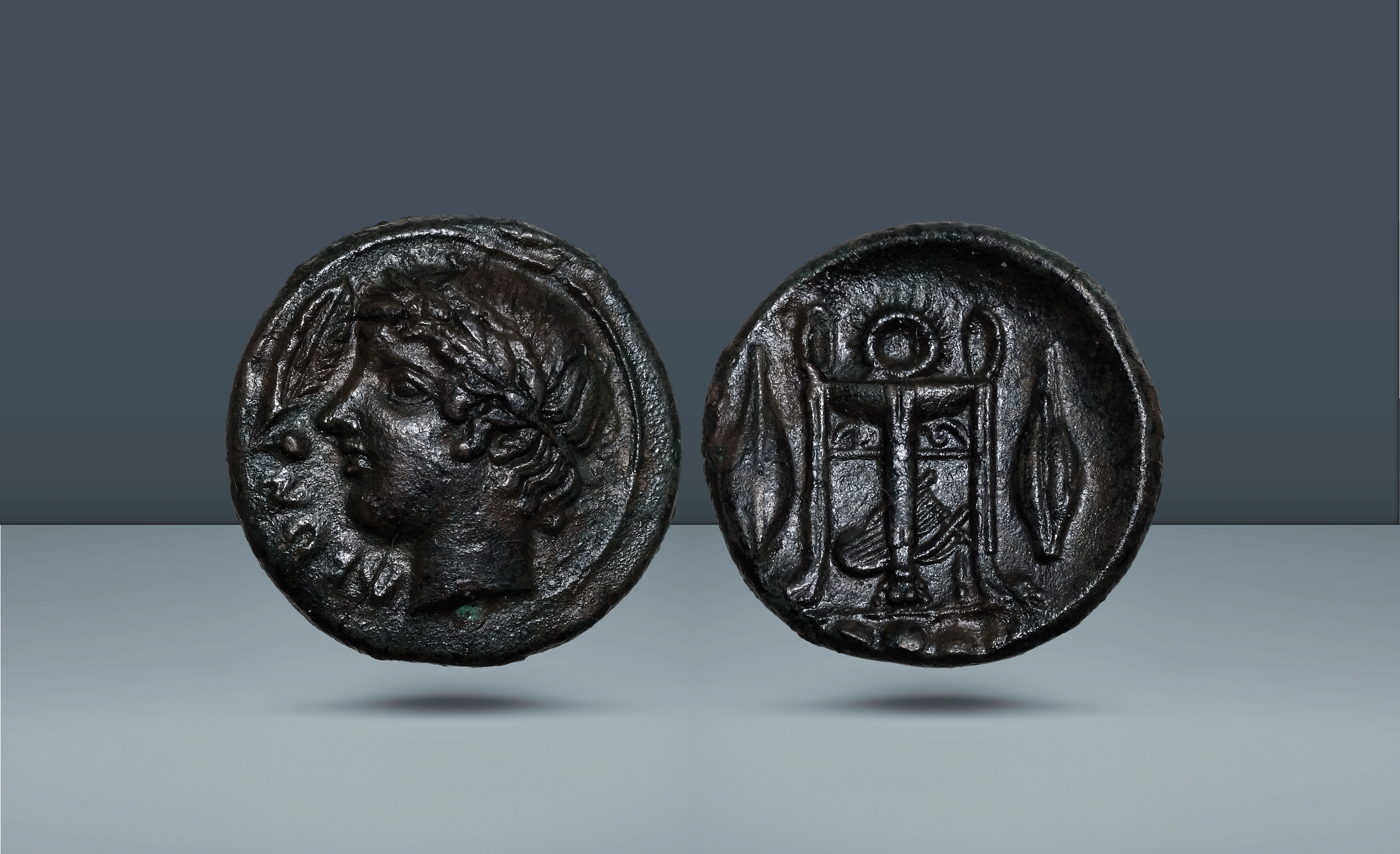
Sicily, Leontini. c. 405-402 BC
AE Tetras, 1.74g (14mm, 3h).
ΛEON Laureate youthful male head to l., in l. field, leaf. / Tripod; in background lyre, at sides, two grains and in exergue, three pellets
Pedigree: Ex Leu 86, 2003, 271 and NAC 114, 2019, 54 sales.
References: Boehringer, Atti VI Convegno CISN, 1977, pl. XIX, A15. Boehringer, Essays Price, pl. XIII, 73. Calciati 1.
Grade: Beautiful chocolate patina with sharp strike and powerful imagery. An exquisite example in high grade. Mint State
gk2122
Scroll down for more information about this coin.
Struck around 405 - 402 BCE, this bronze Tetras of the Chalcidian colony of Leontini in eastern Sicily features one of the more immediately recognizable symbols in Greek numismatics: the tripod. The reason is straightforward enough, Leontini had an exceptionally deep devotion to Apollo, and the tripod was his most potent sacred emblem, most famously associated with the Delphic oracle but a standard fixture of Apolline sanctuaries across the Greek world. From the city's coinage as a whole, it is abundantly evident that Apollo was worshipped there with special fervor.
That devotion, however, was not incidental. Leontini was founded in 729 BCE by settlers from Naxos, the earliest Greek colony in Sicily, and was already the location of the famous sanctuary of Apollo Archegetes. The cult was essentially inherited at the moment of the city's founding. When Leontini later placed Apollo's laureate head on the obverse of its silver coinage, the tripod on the reverse functioned as a kind of confirming shorthand, doubling down on the same religious identity. It is also worth remembering that tripods were the premier prize at Panhellenic festivals, so the symbol carried an athletic prestige alongside its purely religious meaning.