Sicily, Syracuse. Unsigned work by Kimon, c. 404-400 BC
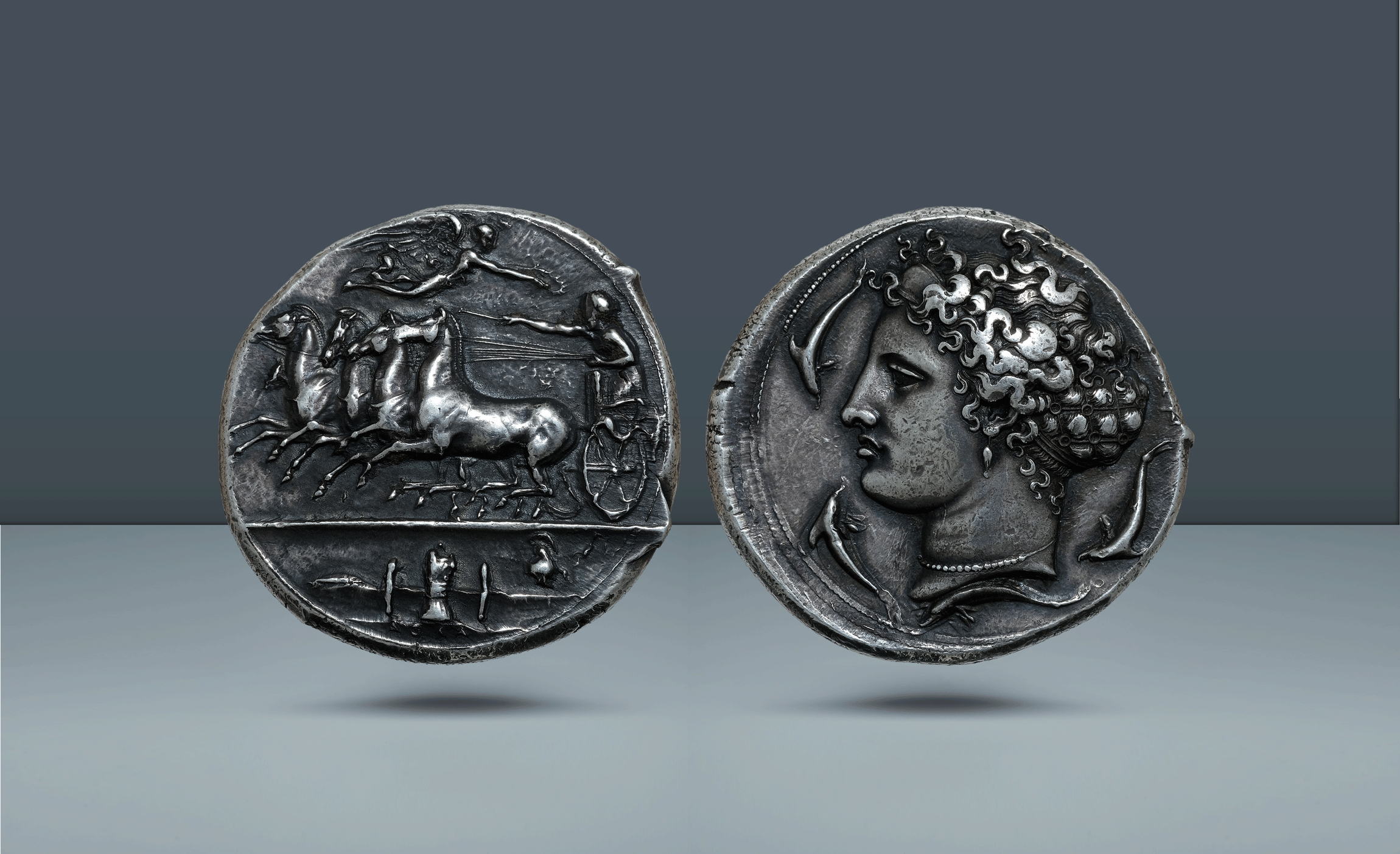
Sicily, Syracuse. Unsigned work by Kimon, c. 404-400 BC
AR Dekadrachm, 43.50g (37.3mm, 7h)
Fast quadriga driven l., Nike flying right to crown him. In exergue, military harness set on two steps / Head of Arethusa l., wearing earring with pendant and beaded necklace, with wavy hair bound in front with ampyx and caught up behind by net. Around four dolphins
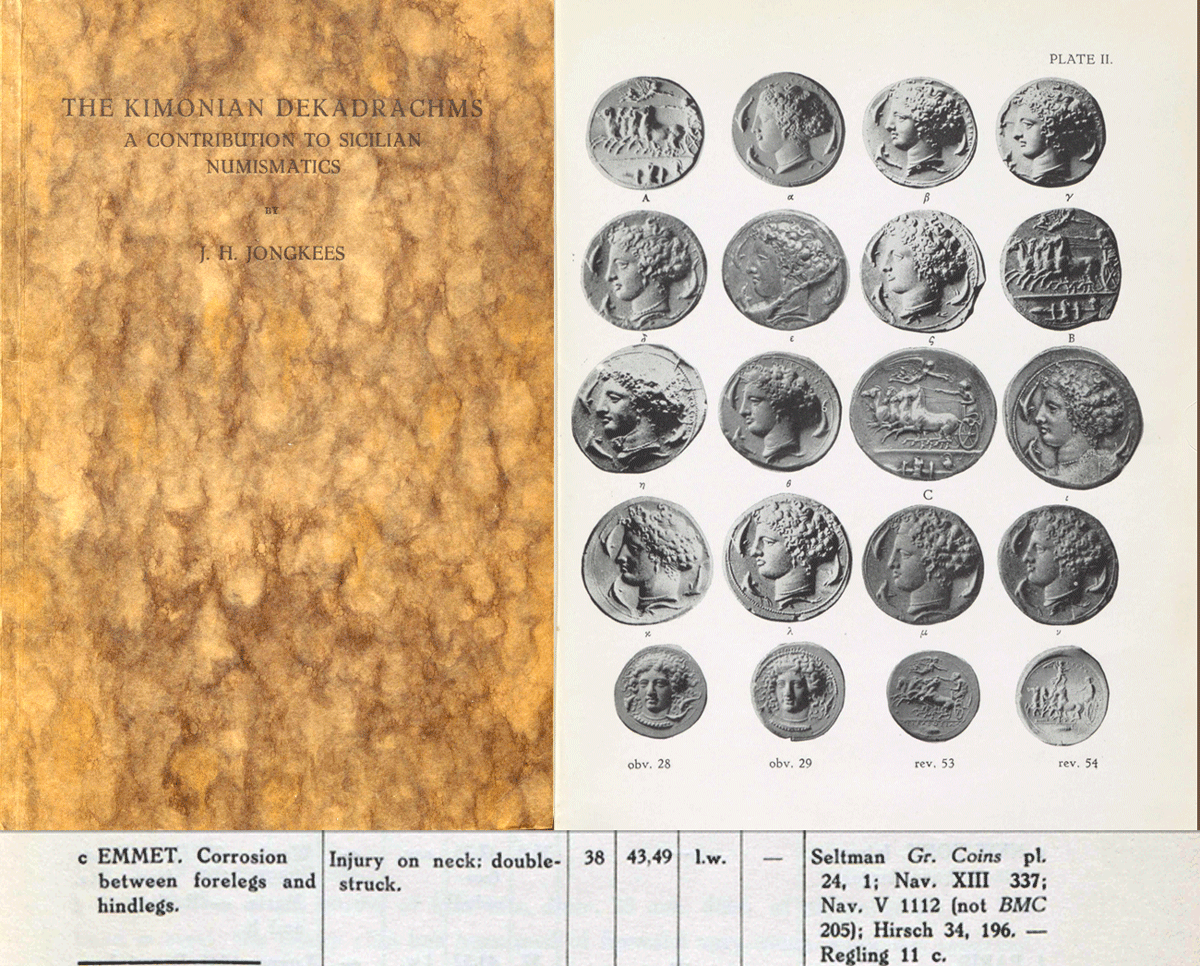
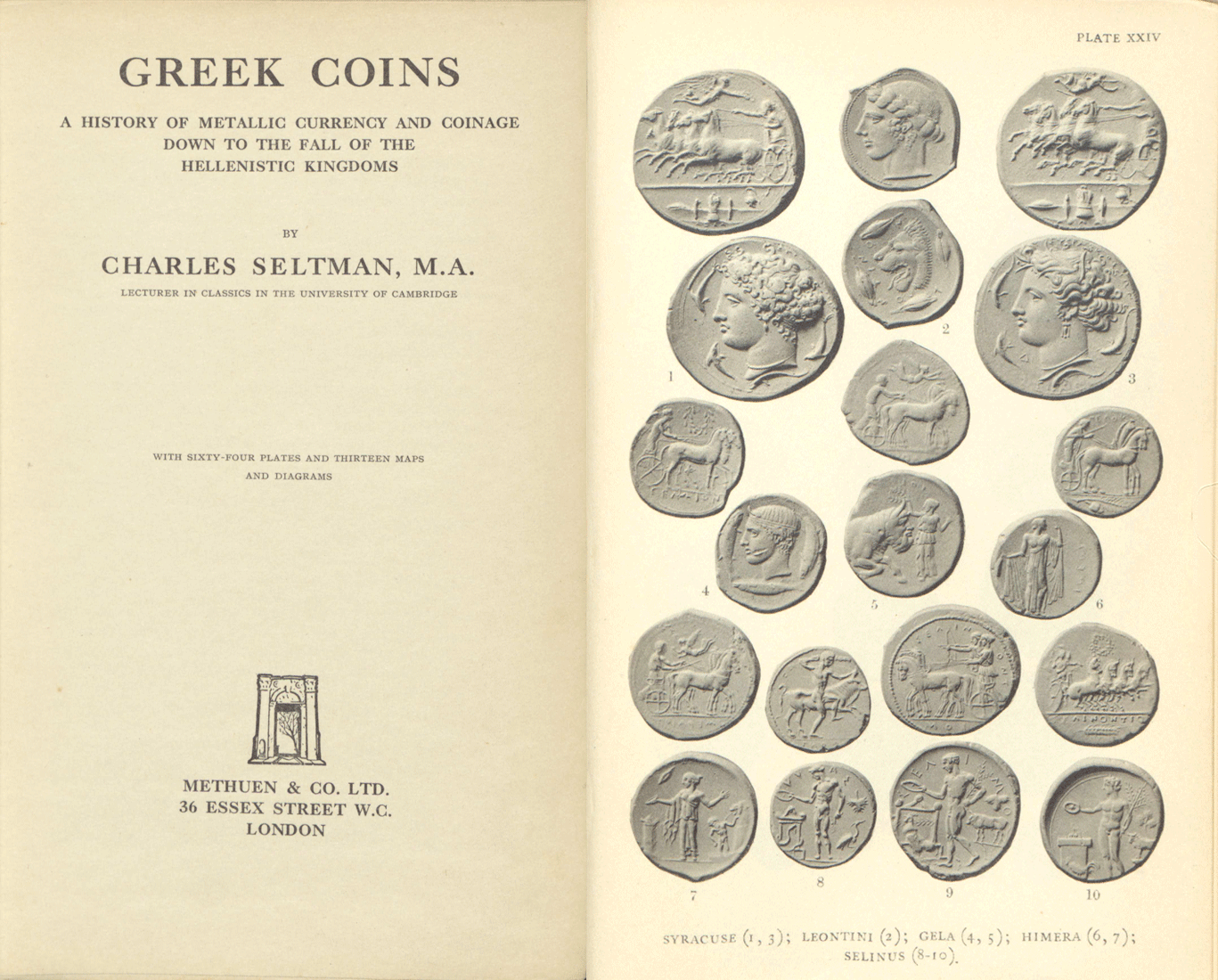
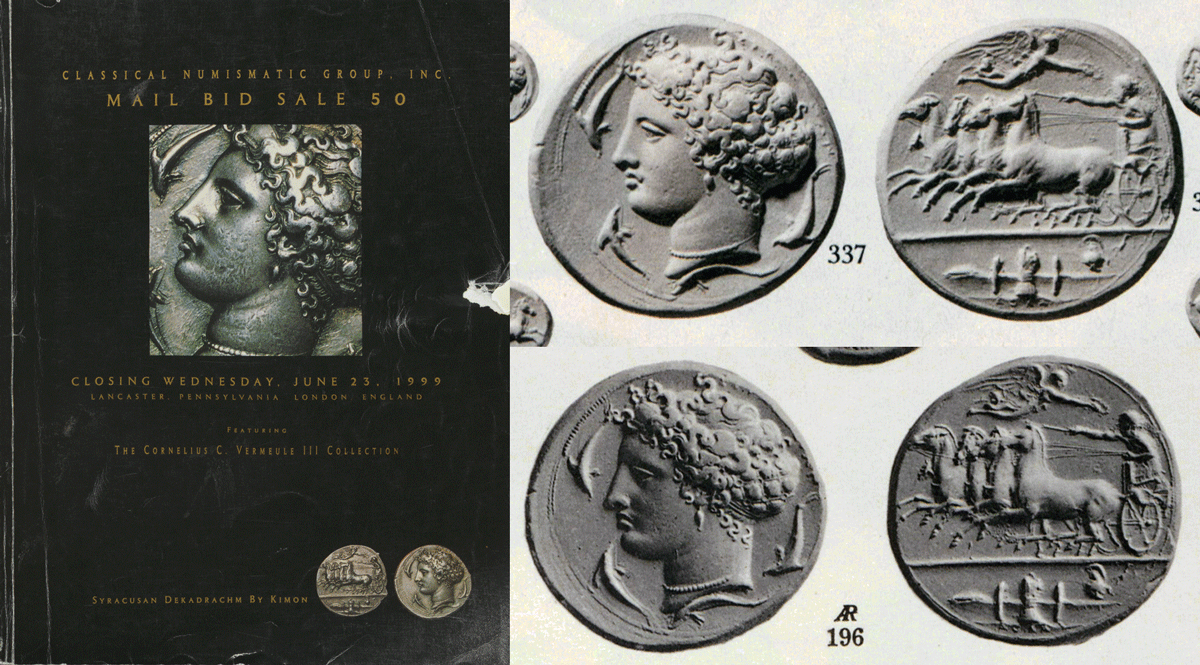
Pedigree: Raffaele Garrucci Collection (1811-1885), Dr. Jacob Hirsch 34 (5 May 1914), 196 (illustrated on front cover). Naville V (18 June 1923), 1112. Ars Classica XIII (27-29 June 1928), 337. CNG 50 (23 June 1999), 509. Nomos FPL (2012), 5
References: Gulbenkian 307 (these dies); HGC 2, 1298; Mildenberg, Essays Kraay-Mørkholm, pl. XLIV, 11 (these dies); Jongkees 11c (this coin plated); Regling, Syrakus 11c (this coin plated); Rizzo pl. L, 6 (this obverse die); Seltman, Greek Coins, pl. 24, 1 (this coin plated)
Grade: Arguably one of the most beautiful types ever produced in the Greek series with an unusually serene looking rendition of Arethusa. This is a Kimon type with a style that is reminiscent of Euainetos. This coin has been in collections for close to 150 years and is a plate coin in some of the most important references on the Syracuse master. Masterfully struck with no traces of die rust on the obverse. Some wear on the highpoints. Reverse is slightly off center which eliminates one of the dolphins (on the far right of Arethusa). A work of incredible magnitude. Mint State
gk2101
Scroll down for more information about this coin
This extraordinary dekadrachm belongs to the final flowering of Syracusan numismatic art at the close of the fifth century BC, a period defined by technical virtuosity, aesthetic refinement, and the emergence of the individual die engraver as an artistic personality. Although unsigned, the coin is universally attributed to Kimon, whose mastery of portraiture and compositional balance marks one of the highest achievements of Greek coinage.
The obverse quadriga is rendered with exceptional dynamism: the horses surge forward at full gallop, their musculature articulated through subtle incision rather than heavy modeling. Nike’s poised descent introduces a counterbalancing vertical element, reinforcing the triumphal narrative while preserving compositional harmony. The military harness in the exergue-carefully arranged on two steps-has been interpreted as an allusion to Syracusan martial preparedness and civic pride during the turbulent decades following the Athenian defeat in Sicily.
The reverse presents a serene and idealized head of Arethusa, whose calm expression and classical proportions contrast deliberately with the energy of the obverse. Her hair is meticulously arranged, the ampyx and sakkos rendered with extraordinary delicacy, while the pendant earring and beaded necklace introduce refined ornamental detail. The surrounding dolphins-symbolic of Syracuse’s maritime identity-frame the portrait in a rhythmic circular motion. On this specimen, the reverse is slightly off center, resulting in the loss of the far-right dolphin, a minor technical flaw that does little to diminish the overall visual impact.
Stylistically, the head of Arethusa displays a synthesis of Kimon’s hallmark linear elegance with a softness more commonly associated with Euainetos, suggesting either mutual influence or a shared workshop tradition. The unusually tranquil expression of Arethusa on this die has long been noted by scholars as among the most compelling in the Syracusan series, emphasizing introspection over overt idealization.
The coin is struck from the same dies as the Gulbenkian specimen and is a plate coin in several of the most important scholarly references on Syracusan coinage, including Regling, Jongkees, Rizzo, and Seltman. Its exceptional pedigree-tracing back through the Garrucci Collection in the nineteenth century and passing through landmark sales such as Hirsch 34 (1914), Naville V (1923), and Ars Classica XIII (1928)-places it among a small corpus of canonical examples that have shaped modern understanding of Kimon’s oeuvre.
Technically, the piece is masterfully struck, with no evidence of die rust on the obverse and only light wear on the highest points. Despite the minor off-centering on the reverse, the preservation of surface quality and sculptural detail supports its classification as Mint State.
This dekadrachm stands not merely as a monetary artifact, but as a monumental work of classical art in miniature-an enduring testament to the artistic ambition of late Classical Syracuse and to Kimon’s singular contribution to the history of numismatic engraving.