Denmark, Lund. Harald III "Hen", Svafa (Moneyer), 1076-1080 AD, c. 1076-1080 AD
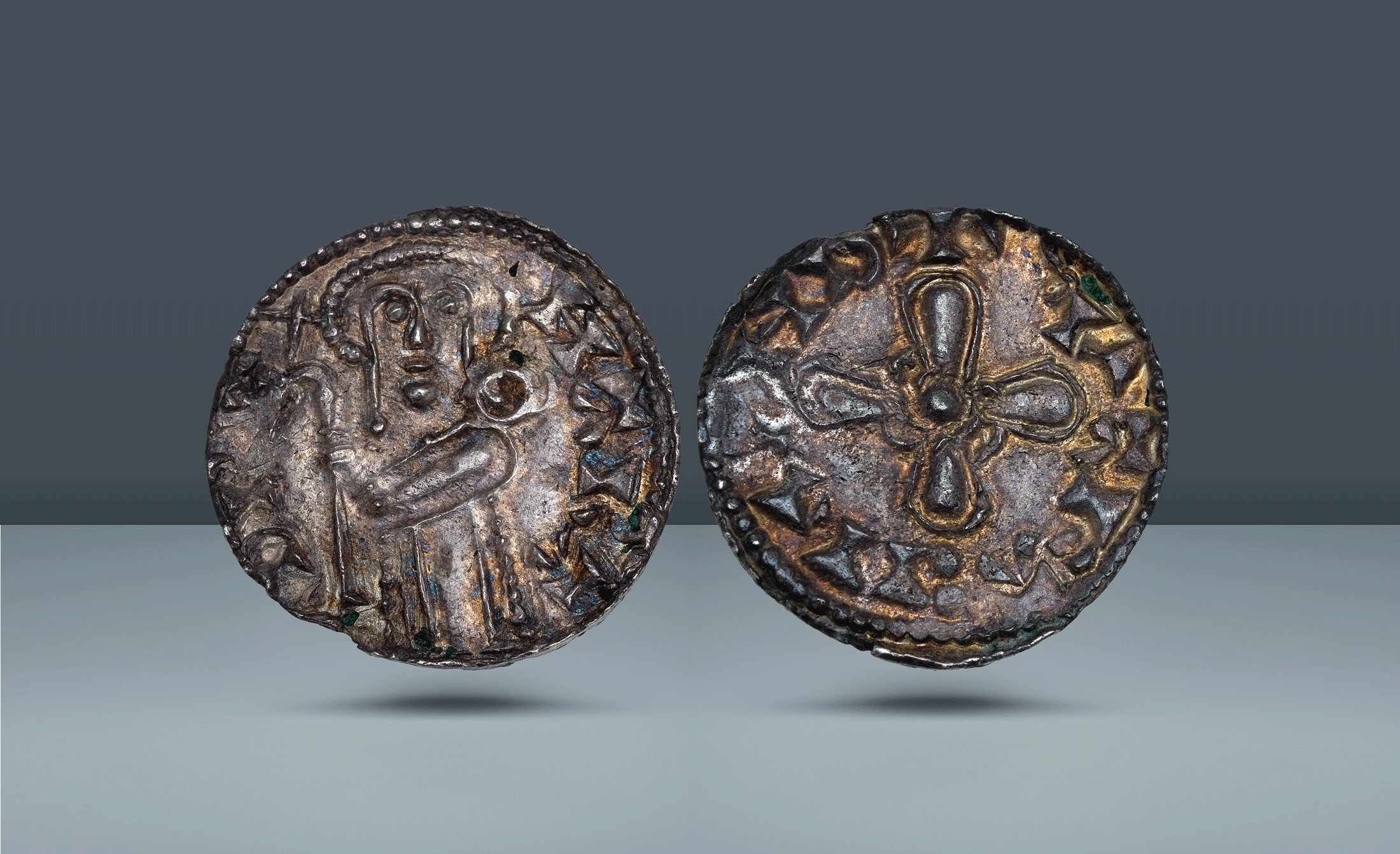
Denmark, Lund. Harald III "Hen", Svafa (Moneyer), 1076-1080 AD, c. 1076-1080 AD
AR Penny, 0.83g (16.8mm, 6h).
Nimbate figure standing facing, holding crozier in r. hand / jeweled cross
Pedigree: From the L. E. Bruun Collection. Ex: Countship of Brahesminde Collection (Private Sale - 1922). Accompanied with original red Bruun cabinet ticket
References: Hauberg-1, cf. Hauberg Collection-1198, Poulsen-SK1.1a, Bruun-1983 (this coin)
Grade: Previously graded NGC MS-64. Beautifully toned and in excellent condition for this rare issue. Mint State for issue
wc1330
Scroll down for more information about this coin.
The coinage of Harald III of Denmark occupies a pivotal moment in medieval Scandinavian numismatics-a period when the young Nordic kingdoms were consolidating Christian orthodoxy and integrating themselves into the broader European monetary economy. The pennies of Harald "Hen," though humble in denomination and modest in metal content, reveal the interplay of royal authority, ecclesiastical power, and commercial aspiration that characterized the late eleventh century in the north.
This penny, struck at the archiepiscopal mint of Lund by the moneyer Svafa, presents an iconography of profound religious significance. The obverse displays a nimbate figure standing in frontal pose, the saint's halo a declaration of sanctity and divine favor. The crozier held in the right hand-the pastoral staff of episcopal authority-identifies this as a bishop or archbishop, most likely St. Laurentius, the patron of Lund's cathedral and a figure of immense veneration in medieval Scandinavia. The reverse bears the jeweled cross, that universal symbol of Christian sovereignty, simple yet elegant in its geometric perfection. This is coinage as theological statement: the saint and the cross together proclaim that royal authority in Denmark derives from and is sanctified by the Church.
The moneyer's name, Svafa, appears as a mark of personal responsibility for the coin's standard-a practice that anchors these medieval issues in the hands of individual craftsmen and provides modern numismatists with a precise chronological framework. The exceptional preservation, graded Mint State and accompanied by the original red ticket from the legendary L. E. Bruun Collection, speaks to the care with which this coin has been treasured across generations of collectors. The Bruun Collection itself represents one of the great twentieth-century assemblies of medieval Scandinavian numismatics; to own a coin bearing that provenance ticket is to hold an artifact of collecting history itself.
The toning, beautiful and undisturbed, and the sharpness of strike attest to the skill of Lund's moneyers during this formative period of Danish kingship. This is a coin from the threshold of the High Middle Ages, a voice from the north speaking in the universal language of Christian Europe.