
Denmark, Lund. Magnus I "The Good", Toi (Moneyer), 1042-1047 AD, c. 1042-1047 AD
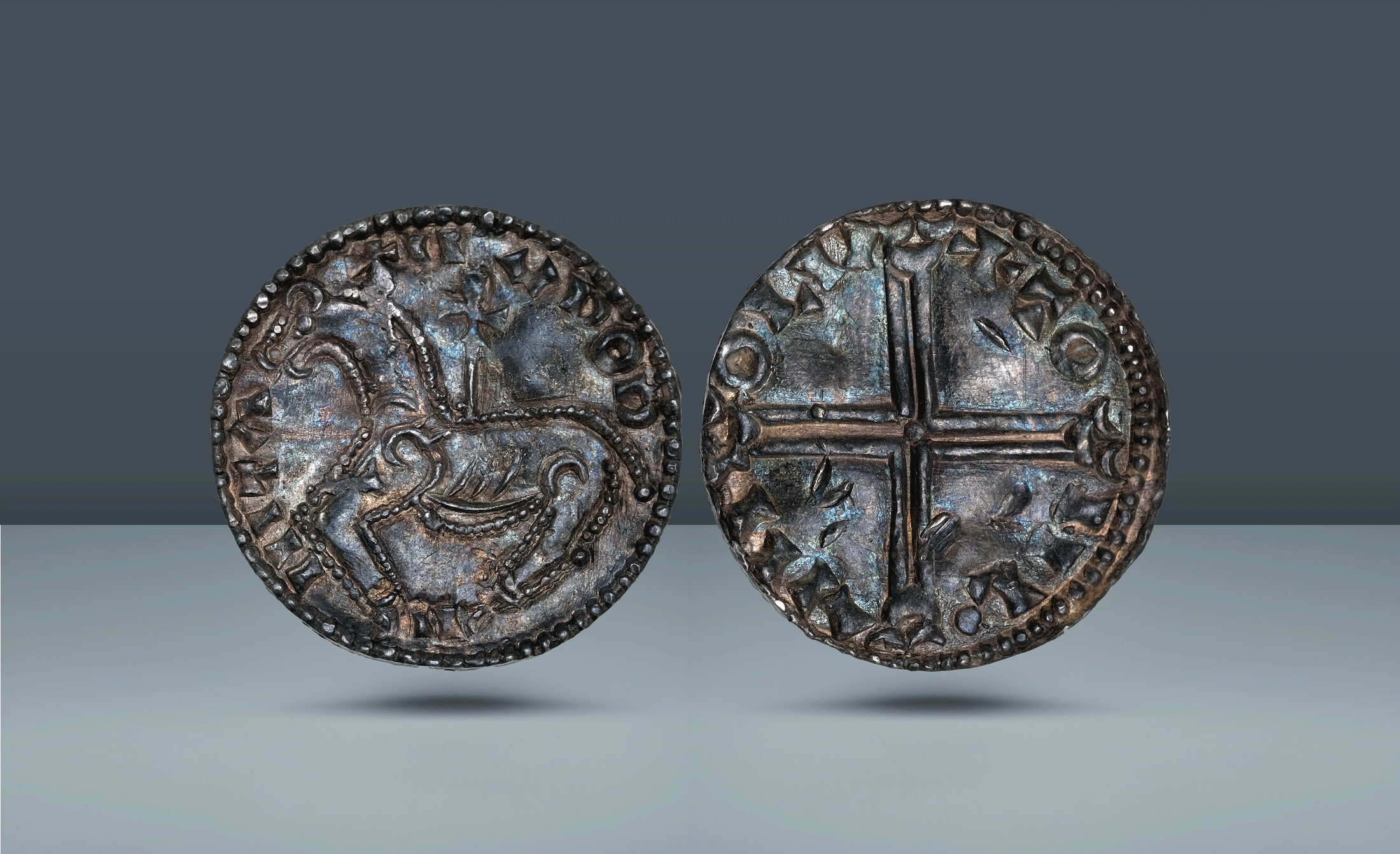
Denmark, Lund. Magnus I "The Good", Toi (Moneyer), 1042-1047 AD, c. 1042-1047 AD
AR Penny, 1.00g (17mm, 4h).
Horse galloping to l., cross on staff behind (derived from Agnus Dei) / voided long cross with triple-crescent ends
Pedigree: From the L. E. Bruun Collection. Accompanied with original red Bruun cabinet ticket
References: Hauberg-15, Hauberg Collection-691, Bruun-1608 (illustrated plate 6) (this coin)
Grade: Previously graded NGC Unc Details--Peck Marked. A superior example with beautiful toning and exceptional details. Agnus Dei ("The Lamb of God") is a rare and intriguing image. Mint State for issue
wc1328
Scroll down for more information about this coin.
The reign of Magnus I of Norway, known to posterity as "The Good," marked a moment of rare stability in the turbulent politics of eleventh-century Scandinavia. Though his primary realm lay across the North Sea, Magnus exercised authority sufficient to strike coins at Lund, the archiepiscopal mint that served as one of northern Europe's most important centers of monetary production. This penny, minted by the moneyer Toi, preserves an image so unusual, so theologically charged, that it stands apart even among the iconographically rich coinage of medieval Christendom.
The obverse presents a horse galloping leftward, its form rendered with surprising naturalism and vigor. Behind the beast, a cross rises on a staff-an image at first perplexing until one recognizes its origin: this is the Agnus Dei, the Lamb of God, reimagined through a distinctly Nordic lens. The lamb of Christian iconography, symbol of Christ's sacrifice and redemption, has been transformed into a horse, that creature of northern valor and martial prowess. Yet the cross remains, unchanged and unmistakable, anchoring the pagan vigor of the horse to the Christian truth it proclaims. This is not confusion or incompetence but rather a sophisticated act of cultural synthesis-the moneyer Toi rendering Christ's redemptive power in the language of his people.
The reverse presents a voided long cross with triple-crescent ends, a design of geometric elegance that speaks to the refinement of Lund's mint during this period. The triple crescents, echoing lunar symbolism, add an almost mystical dimension to what might otherwise be a purely geometric composition.
The exceptional quality of this example, preserved with beautiful toning and remarkable clarity despite minor pecking marks from ancient handling, attests to the care lavished on these coins at their creation. The presence of the original red Bruun cabinet ticket connects this piece to one of numismatics' greatest private collections-a lineage that itself confers significance upon any medieval coin fortunate enough to bear it. The rarity of the Agnus Dei type, combined with the superior preservation and impeccable provenance, makes this penny a remarkable window into the spiritual and artistic vision of eleventh-century Scandinavia at the moment of its Christian consolidation.