Roman Empire, Italy. Trajan, 96-117 AD Rome, c. 103 AD
Roman Empire, Italy. Trajan, 96-117 AD Rome, c. 103 AD
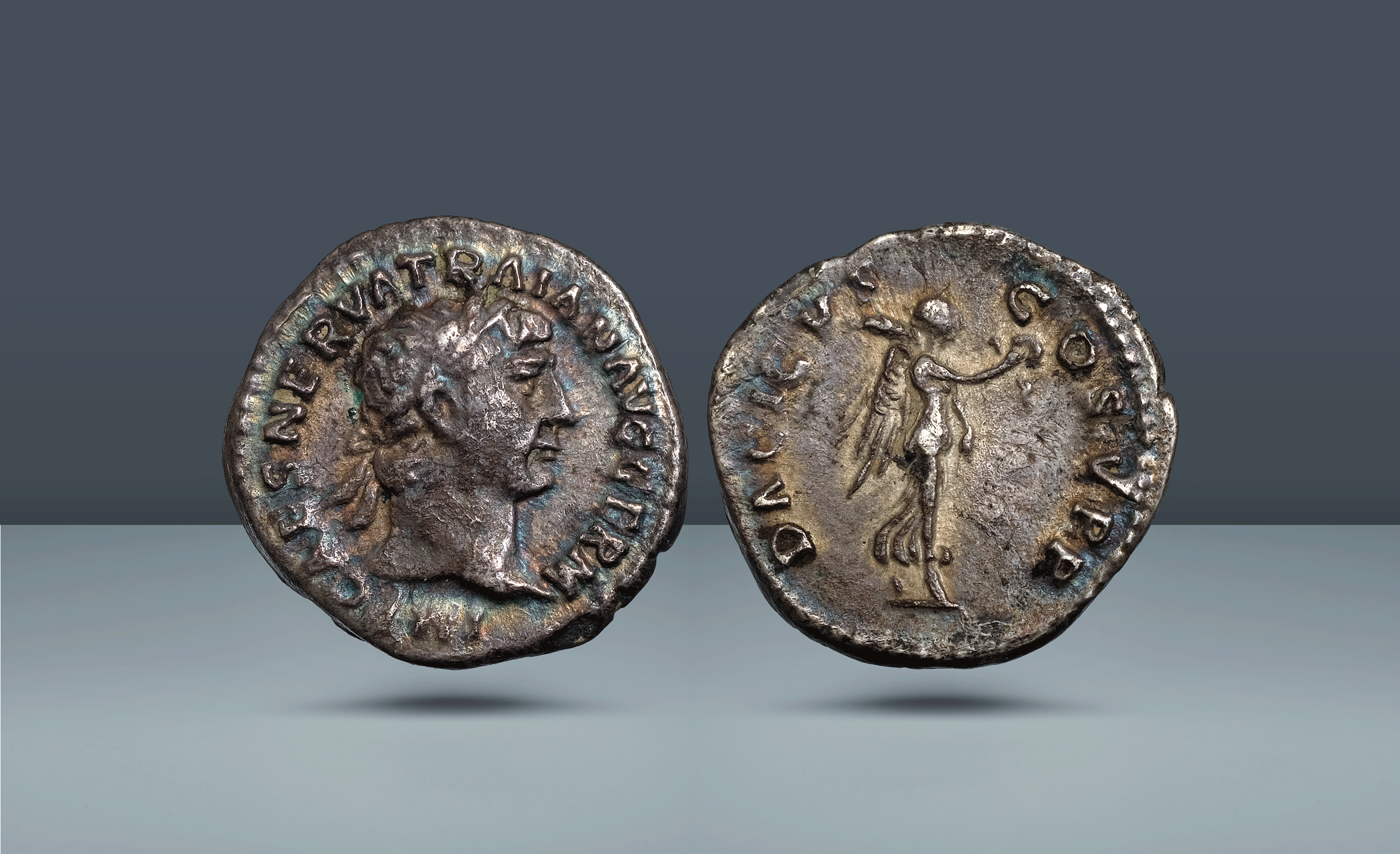
AR Quinarius, 1.47g (16mm, 6h).
IMP CAES NERVA TRAIAN AVG GERM Laureate head r. / DACICVS COS V P P Victory advancing r., holding wreath in r. hand, palm over l. shoulder
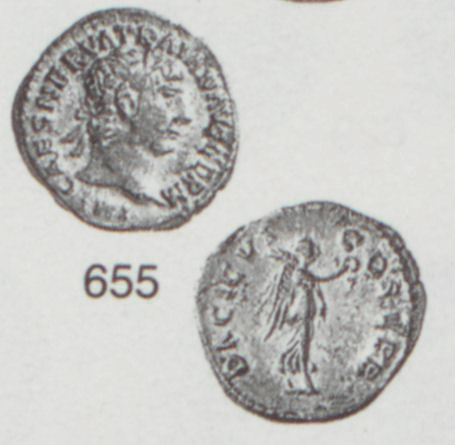
Pedigree: From the collecton of Carl Subak. Ex Emporium Hamburg Auction 11,18-19 December 1987, lot 655.
References: C 132. BMC 140. Woytek 151a (this coin listed). RIC 74. CBN –. King 16f (this coin illustrated).
Grade: Pleasantly in hand. Some iridescent toning. Minor wear. VF+
re1427
Scroll down for more information about this coin.
This quinarius commemorates one of the defining military achievements of Trajan's reign: the conquest of Dacia and the subjugation of King Decebalus. The reverse legend DACICVS-itself a variation on the more common DACICUS-marks this as coinage specifically minted to celebrate the triumph, struck in the years immediately following the Second Dacian War (105–106 AD).
The portrait of Trajan on the obverse is rendered in the confident imperial style characteristic of his coinage. The laureate head captures the emperor in his prime, during the years when his military reputation was at its zenith and his authority was most firmly established. The inscription IMP CAES NERVA TRAIAN AVG GERM anchors the portrait to the imperial titulature, referencing both his adoption by Nerva and his command over the Germanic frontier.
The reverse presents Victory (Nike) in triumphant stride, advancing to the right with wreath held aloft in her right hand and palm branch draped over her left shoulder. This composition was deeply resonant with Roman audiences of the period. The wreath and palm were unmistakable symbols of military victory, and their appearance on a coin was a direct assertion of Roman dominance. Trajan's Dacian victory was no mere frontier skirmish-it represented the conquest of a wealthy and threatening enemy, the annexation of vast gold-bearing territories, and a demonstration of Roman military superiority that reverberated through the empire and beyond.
The quinarius, struck in fine silver, occupied an important intermediate position in the Roman monetary hierarchy, valued at half a denarius. These smaller denominations were essential for commerce throughout the empire, particularly in provincial markets and for everyday transactions. Quinarii were struck in smaller quantities than their denarius counterparts, making them somewhat scarcer in the archaeological record and in modern collections.