
Roman Empire, Ravenna. Julius Nepos, AD 474-475/480, c. 474-475 AD
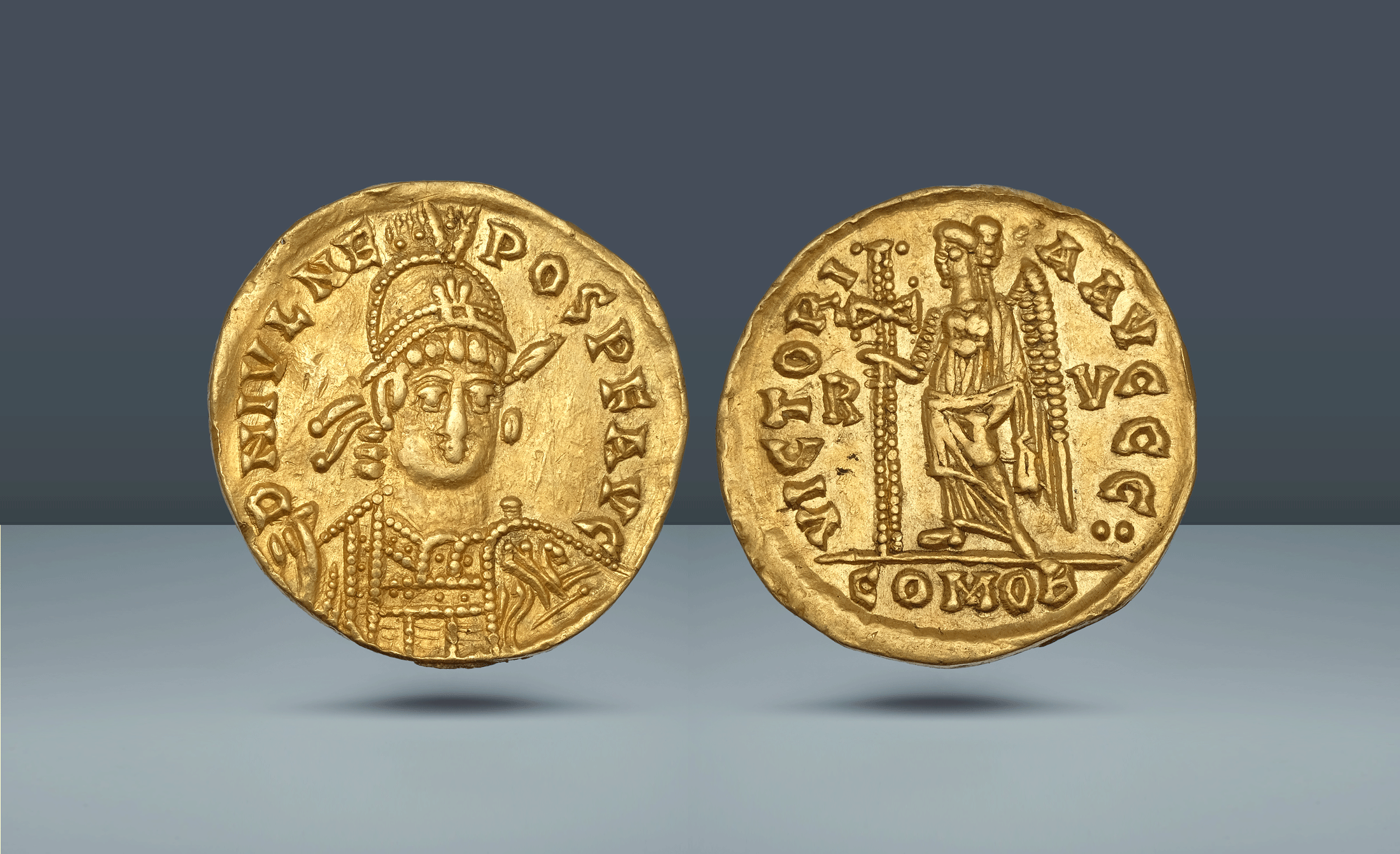
Roman Empire, Ravenna. Julius Nepos, AD 474-475/480, c. 474-475 AD
AV Solidus, 4.13g (18.5mm, 6h )
Pearl-diademed, helmeted, and cuirassed bust facing slightly right, holding spear over shoulder and shield decorated with horseman motif / Victory standing left, holding long jeweled cross; R|V//COMOB.
References: RIC X 3212; Lacam pl. 37, 9; Depeyrot 41/1; Ranieri 181; Biaggi 2388.
Grade: In excellent condition for the rarity. Some edge marks. Extremely rare. EF
re1472
Scroll down for more information about this coin.
In the final convulsion of the Western Roman Empire, as barbarian kingdoms carved themselves from the flesh of centuries-old institutions, a handful of emperors continued to strike gold in the name of Roman authority. Julius Nepos represents the last flicker of legitimate imperial power in the west-a figure of tragic historical irony whose coins proclaim an empire already dissolving around him.
Nepos ascended to the purple in 474 AD through the machinations of the magister militum Orestes, only to be deposed by that same general's son, Romulus Augustulus, the following year. Yet even in his brief tenure-and more remarkably, in his attempted restoration around 480 from exile in Dalmatia-Nepos maintained the apparatus of imperial coinage, striking solidi from the mint of Ravenna that proclaimed the continuity of Roman sovereignty. This solidus, struck at the moment of his reign or in its immediate aftermath, exemplifies that defiant claim.
The obverse presents the emperor in full military panoply: pearl-diademed and helmeted, the cuirassed bust dominates the flan with imperial authority, the spear held at his shoulder a symbol of martial virtue, the shield bearing its horseman motif a reference to cavalry prowess and the Germanic foederati upon whom the last Western emperors depended. The reverse speaks a final eloquence: Victory, that eternal companion of Roman triumph, stands leftward bearing the long jeweled cross-a symbol now Christian, now imperial, now desperately hopeful. The mint mark COMOB (Comes Obsequens, "obedient count") identifies this as the product of Ravenna, the capital to which the imperial court had retreated a generation earlier, far from the barbarian-threatened north.
The gold itself-pure and weighty at over four grams-represents one of the last assertions of Roman monetary authority in the west. Within a generation, such coins would cease to be struck. The exceptional quality of this example, preserved with the refinement befitting an imperial treasure, attests to its status as an instrument not merely of commerce but of sovereignty itself. This is a coin from the threshold of a new world, struck in the name of an order that would not survive the decade.