
Seleucis and Pieria, Antioch. Philip I. 244-249 AD. Rome mint, for circulation in Syria, c. 246-early 247 AD
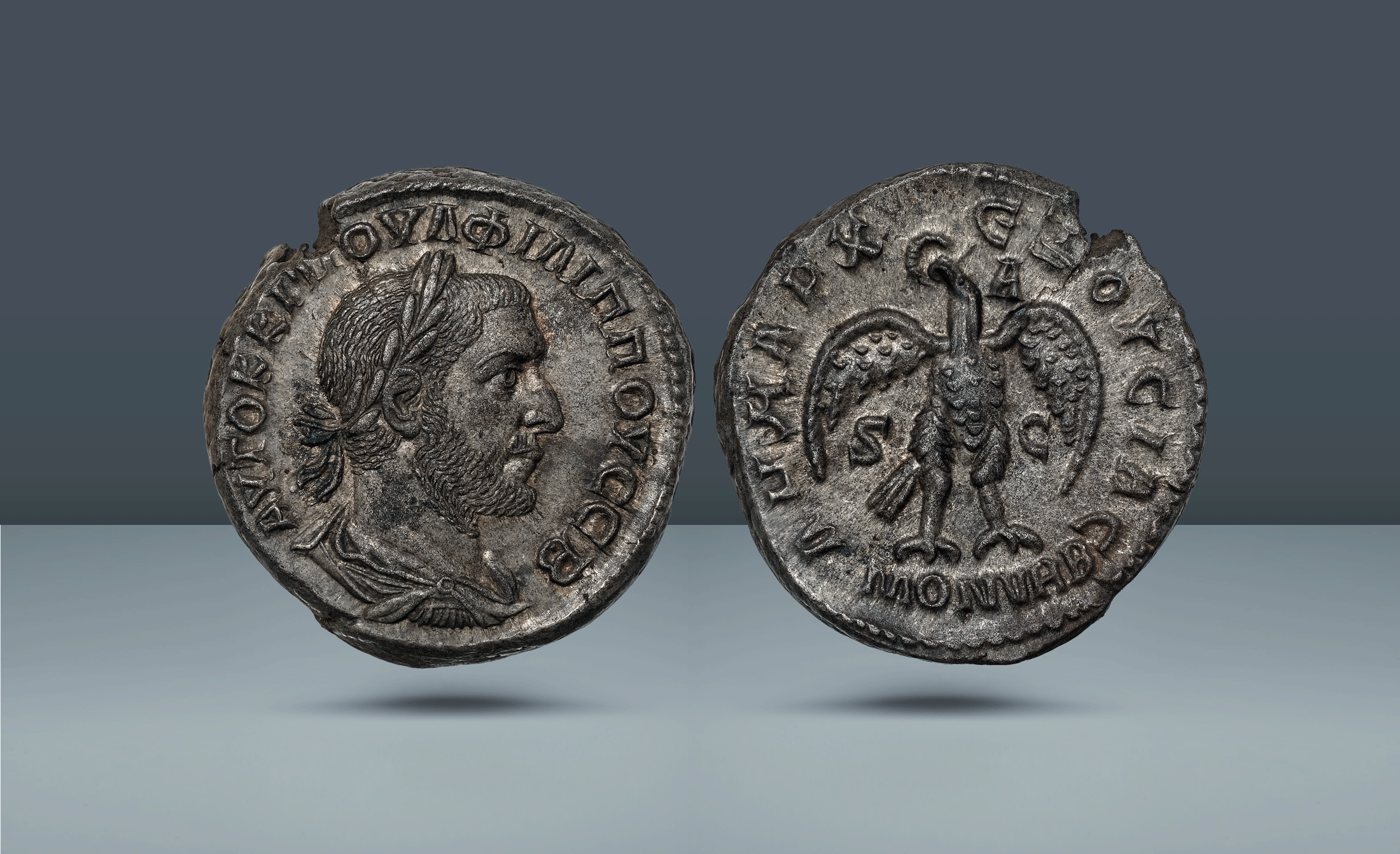
Seleucis and Pieria, Antioch. Philip I. 244-249 AD. Rome mint, for circulation in Syria, c. 246-early 247 AD
BI Tetradrachm, 11.66g (25mm, 12h)
Laureate, draped, and cuirassed bust r., seen from behind / Eagle standing facing, head and tail l., with wings displayed, holding wreath in beak; A to upper r., S C across field, MON(eta) VRB(is) in exergue.
Pedigree: Ex Leu Web Auction 15, 27 February 2021, lot 1467
References: McAlee 901a; RPC VIII Online 29026; Prieur 305
Grade: Previously encapsulated, NGC 8560324-251, graded Ch AU, Strike: 5/5, Surface: 4/5
re1493
Scroll down for more information about this coin.
Following the death of Gordian III during the Persian campaign in AD 244, Marcus Julius Philippus, better known as Philip the Arab, was proclaimed emperor by the Roman army. Philip had served as praetorian prefect and personal council under Gordian. The circumstances surrounding Gordian's death remain disputed, with some ancient accounts implicating Philip in his downfall. After securing the throne, Philip negotiated peace with the Sasanian king Shapur I, allowing him to withdraw and return west. Philip's reign is particularly interesting for the changes that occurred in the production of Syrian provincial coinage. Issued for circulation in Syria, this teradrachm features the familiar eagle reverse associated with coins of Antioch. However, the inscription MON VRB in the exergue distinguishes it from the regular issues. The inscription is generally expanded as Moneta Urbis, referring to the mint of Rome. The scholar H. R. Baldus was the first to propose the now widely accepted theory that these tetradrachms were struck at Rome, or at least produced using dies prepared there, despite being intended for circulation in Syria. Another interesting feature is the use of the genitive case in Philip's obverse inscription. This may suggest that the issue was produced under Philip's personal authority. However, the presence of S C on the reverse, traditionally understood as Senatus Consulto, complicates this interpretation further by suggesting its authorization from the Senate. The precise significance of these inscriptions, and what they reveal about the authority under which the coins were issued, remains uncertain.