Roman Republic, C. Vibius Varus. Rome, c. 42 BC
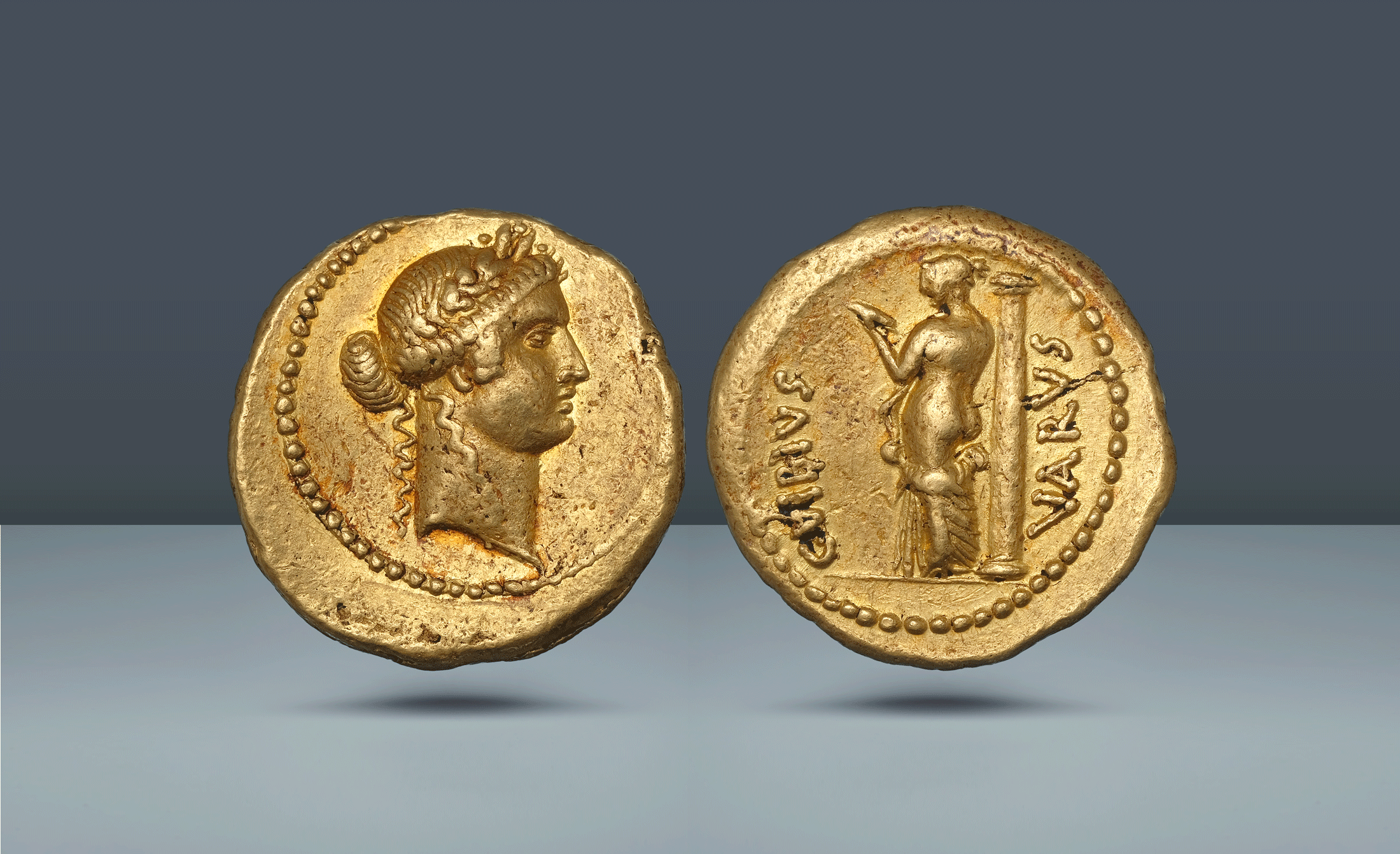
Roman Republic, C. Vibius Varus. Rome, c. 42 BC
AV Aureus, 8.06g (19.5mm, 7h)
Head of Apollo / Venus holding hand mirror, leaning on a column.
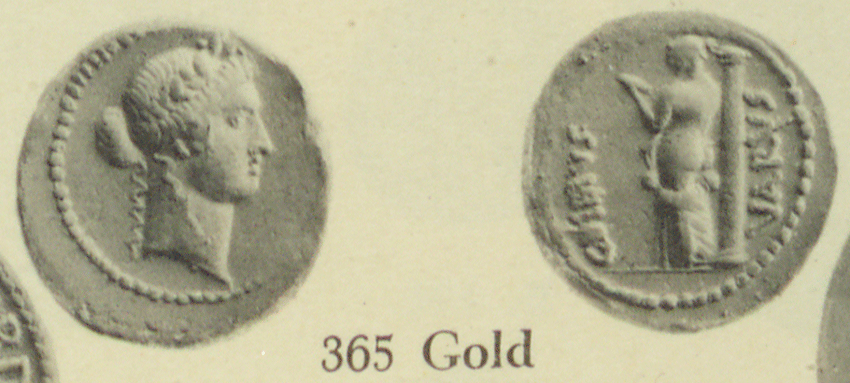
Pedigree: Ex Helbing 59, 1930, lot 365 (sold for 325 marks). From the Alfred Mamroth Collection (1874-1957), with original Mamroth tickets.
References: Cr. 494, 34; Syd. 1137; Calicó 33.
Grade: Overall light wear. Lovely reddish toning with luster. A bit o/c complete. A wonderful historical collector pedigree with handwritten notes and tickets accompanies this lot. EF for issue
rr1433
Scroll down for more information about this coin.
Gaius Vibius Varus is known almost entirely through his coins. He appears in no literary source, and no inscription naming him survives. We do know he was one of the four moneyers of 42 BC, a dangerous year to hold the job. The Second Triumvirate of Mark Antony, Octavian and Lepidus had taken power late in 43 BC and launched the proscriptions, the state-sanctioned killing of their enemies. In 42 BC they pushed through Julius Caesar’s deification as Antony and Octavian gathered their armies for Philippi.
A moneyer that year was less a free agent than a contractor for three men with blood on their hands.
His gold makes this plain. Varus struck aurei for each triumvir. One reads M·LEPIDVS·III·VIR·R·P·C, “Marcus Lepidus, triumvir for the restoration of the Republic.” The Octavian and Antony types pair each man’s portrait with two right hands clasped in a handshake. The message was unity, and it did not last. Lepidus was sidelined by 36 BC, and five years later Antony and Octavian clashed at Actium. The aurei also spell the moneyer’s name oddly, C·VEIBIVS VAARVS, with doubled vowels that look back to older Latin.
The silver follows suit. Varus put Antony and Octavian on denarii backed by Fortuna holding Victory and a cornucopia, a promise of luck for a regime heading to war. Beside these portraits he struck more traditional types: Minerva in helmet and aegis with Hercules on the reverse, a laureate Hercules, and Liber with a panther leaping toward an altar. Strength, war and divine favor were sensible themes with a civil war coming.