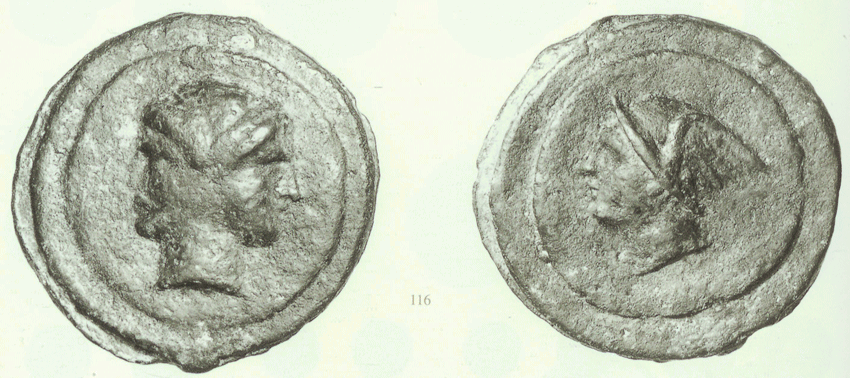
Roman Republic, Italy. Anonymous. Rome, c. 280-276 BC
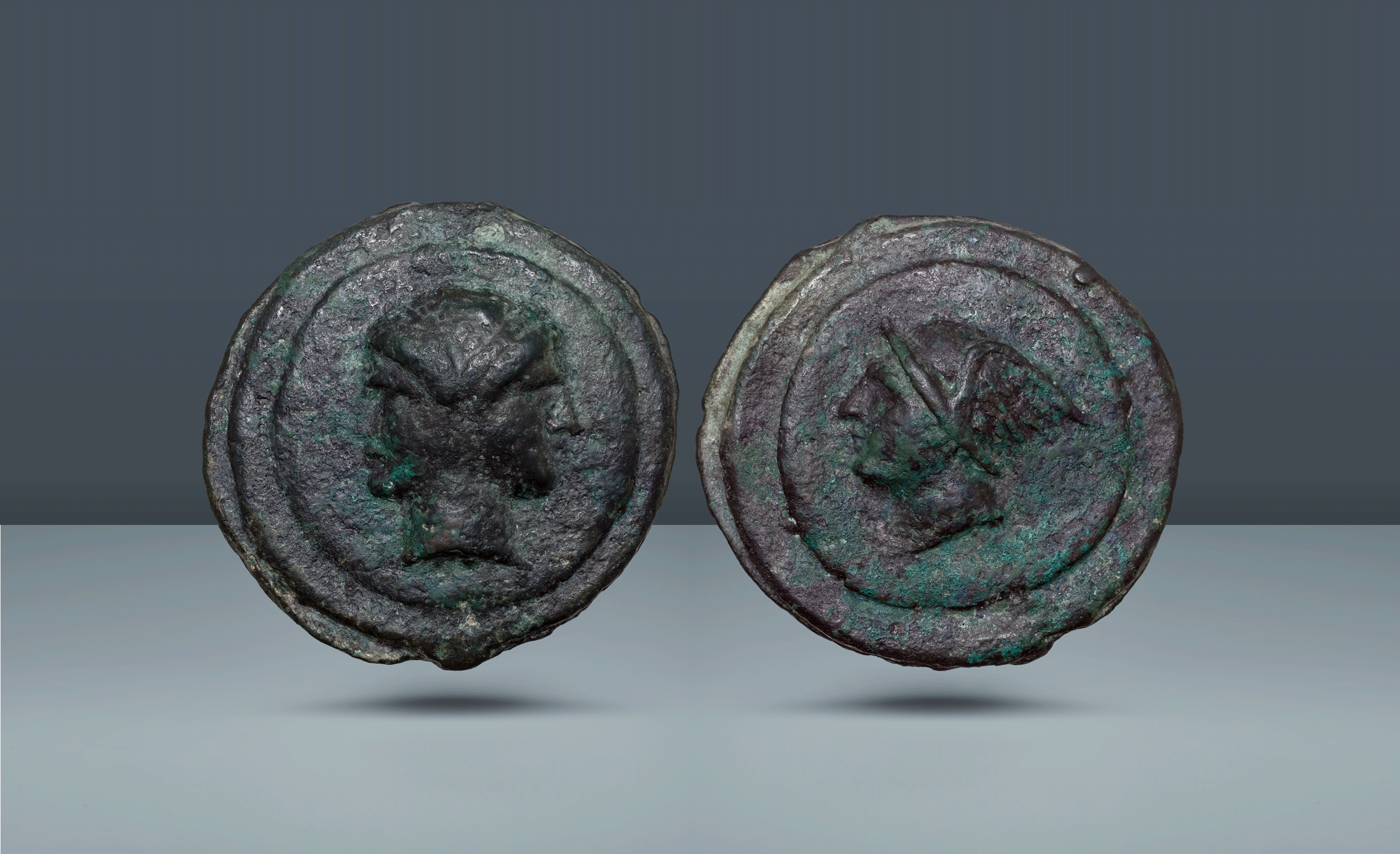
Roman Republic, Italy. Anonymous. Rome, c. 280-276 BC
AE As, 340g (75mm, 1h)
Head of Mercury to l. / Head of Janus
Pedigree: Ex Aretusa, 1, 18 September 1993, lot 116
References: Cr. 14/1; Vecchi 25
Grade: Impressive large bronze with well sculpted Mercury on reverse. Obverse of Janus head is a bit soft but clear. VF+/EF for issue
rr1418
Scroll down for more information about this coin.
This bronze belongs to one of the earliest series of Republic coinage when the Romans began transforming the use of bronze into a recognizable system of coinage. Before the introduction of these coins, the peoples of central Italy had used bronze in various forms as a medium of exchange. These included irregular crude pieces known as aes rude and larger cast bronze bars called aes signatum. Unlike the struck silver coins already circulating in the Greek cities of southern Italy, Rome's earliest bronze coins were produced by pouring molten metal into molds. Known as aes grave, or heavy bronze, they were issued in denominations based on the as, traditionally corresponding to the Roman pound, or libra, of approximately 327 grams.
The weight of this particular rare example is especially interesting. At 340 grams, it exceeds the conventional Roman pound, yet recent scholarship has challenged the assumption that these early coins were manufactured according to a strictly enforced weight standard. In her 2023 study, The Strangeness of Rome's Early Heavy Bronze Coinage, numismatic scholar Prof. Liv Mariah Yarrow examined the surviving examples of these earliest cast bronze issues. She found that specimens could vary considerably, with full unit weights ranging approximately from 290 to 345 grams while remaining within the observable norm. Her research suggests that these coins were produced according to a broadly libral standard, but that their monetary value was not determined solely by the precise quantity of bronze they contained.