
Roman Republic, Ionia. Marc Antony and Octavia. Ephesos, c. 30 BC
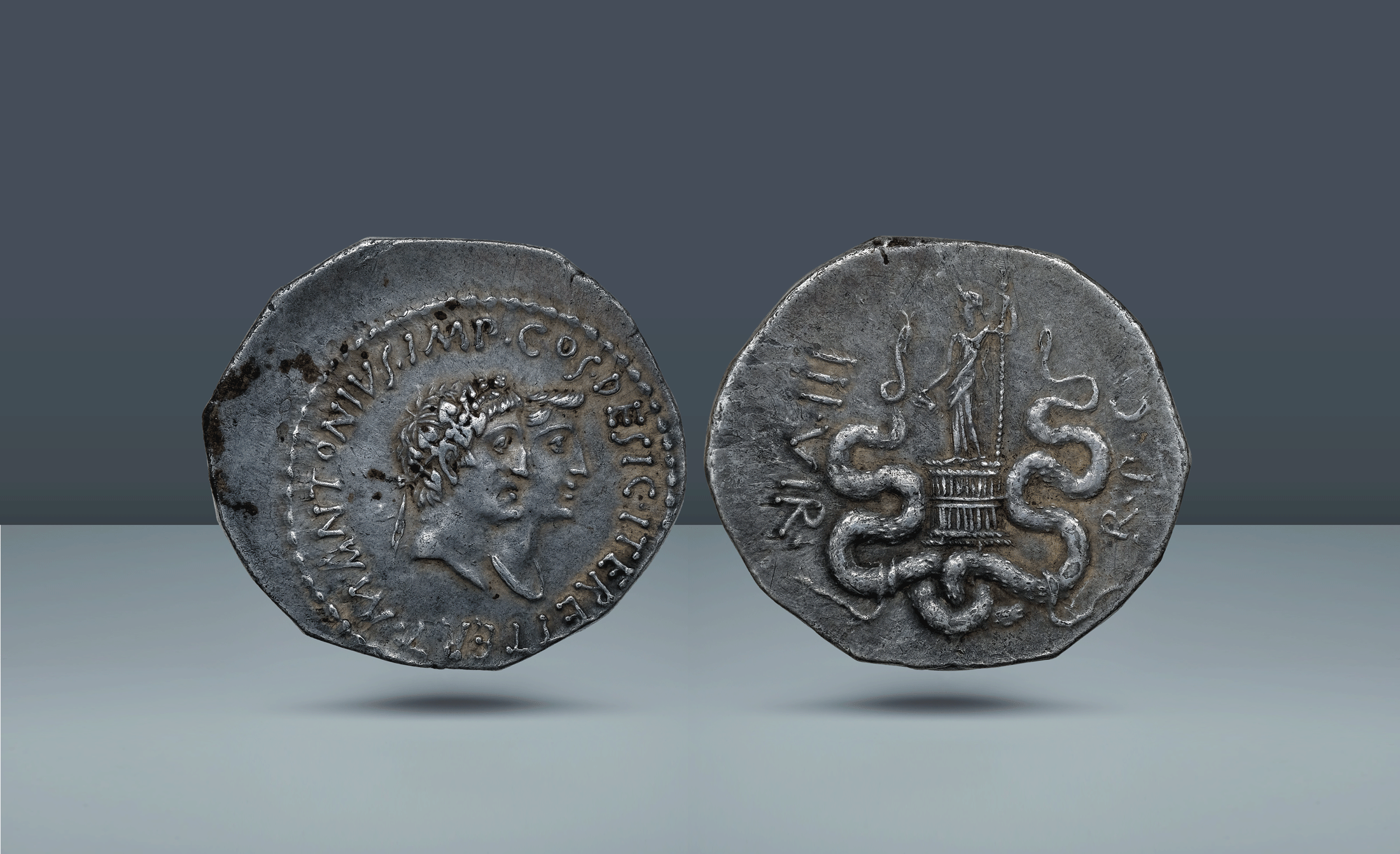
Roman Republic, Ionia. Marc Antony and Octavia. Ephesos, c. 30 BC
AR Cistophorus Tetradrachm, 11.99g (30mm, 12h)
M. ANTONIVS. IMP. COS. DESIG. ITER. ET. TERT. Jugate heads of Mark Antony and Octavia to r. / III.VIR. - R.P.C. Dionysos, draped, standing to l. on a cista mystica, holding a thyrsos and kantharos, all flanked by two serpents with knotted tails.
Pedigree: Ex Roma E39, 26 August 2017, lot 390
References: RPC 2202
Grade: Slightly o/c on obverse. Some black encrustation in left field. Slight overall wear. Good VF
rr1414
Scroll down for more information about this coin.
In 40 BCE, Antony married Octavia, sister of his rival Octavian, to seal the Treaty of Brundisium and preserve an uneasy peace. The coins celebrating the union are among the most interesting portrait issues of the late Republic. The best known are the silver cistophori type struck at Ephesus around 39 BCE, a group to which this coin belongs.
The jugate burst format was not in fact Roman in origin. It was a Hellenistic royal convention, most famously used by the Ptolemies of Egypt, whose gold coins paired Ptolemy II and his sister-wife Arsinoe II as the "Sibling Gods." As a result, audiences in Asia Minor would have recognized Antony and Octavia as a ruling couple. In Rome, where portraits of living women on coins were still new, the image was far more controversial.
The Dionysian imagery is equally important, as Antony had been welcomed into Ephesus in 41 BCE as a new Dionysus, and placing Octavia beside him drew her into that divine identity as well. The partnership however did not last. Antony's relationship with Cleopatra and his divorce from Octavia in 32 BCE led directly to the battle of Actium. Consequently, these coins preserve a fleeting moment before the Republic's final collapse.