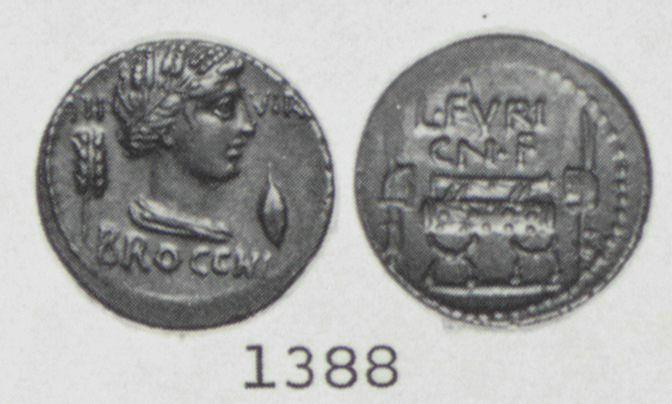
Roman Republic, Italy. L. Furius Brocchus, Rome, c. 63 BC
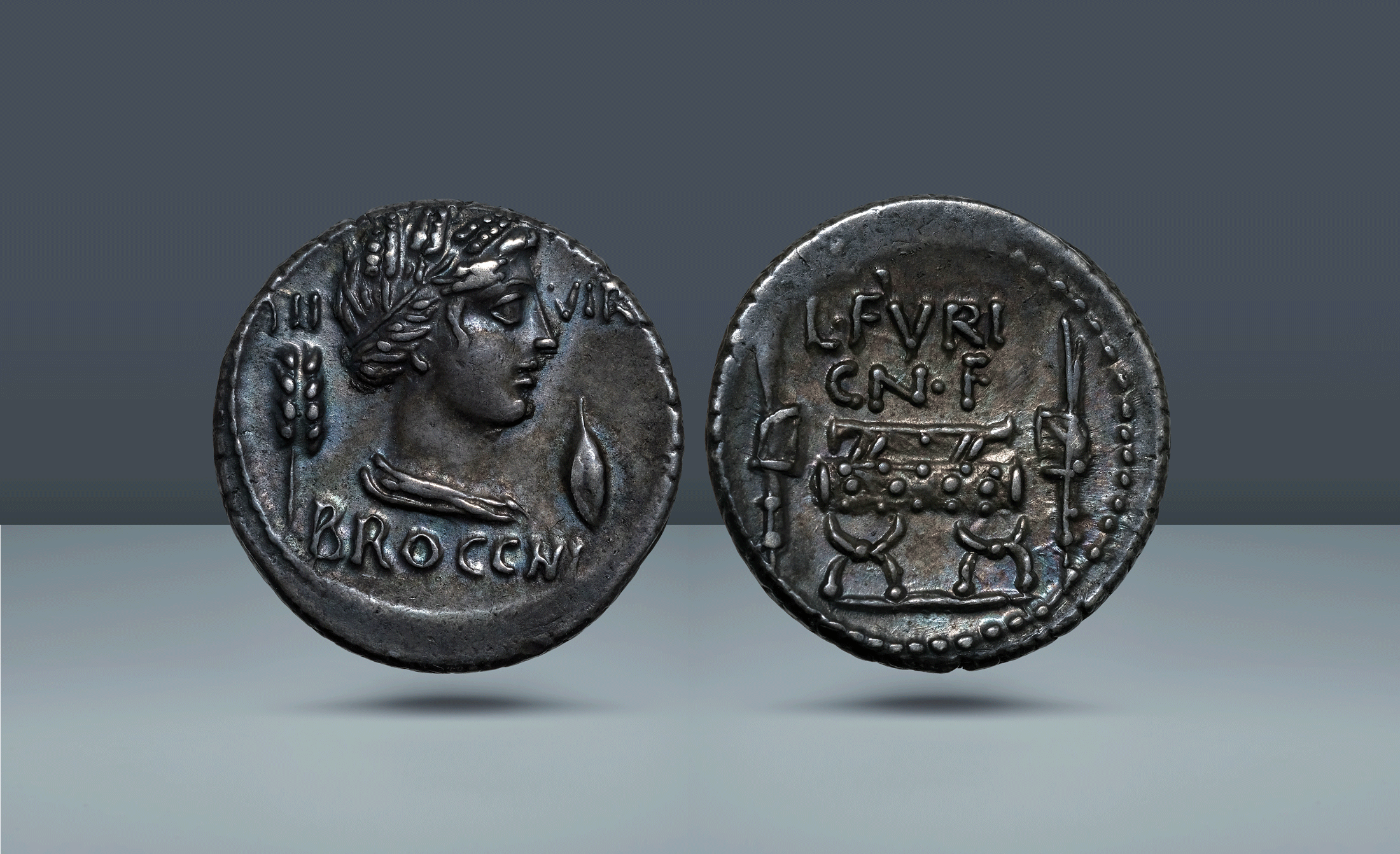
Roman Republic, Italy. L. Furius Brocchus, Rome, c. 63 BC
AR Denarius, 3.83g (18.9mm, 6h).
Bust of Ceres between an ear of wheat and a barley grain / Curule chair between fasces
Pedigree: Ex Coin Galleries, Mail Bid Sale November 11, 1975, 1388 (the Frederic S. Knobloch collection). (comes with original Coin Galleries envelope)
References: Cr. 414, 1; Syd. 902a.
Grade: Beautiful cabinet toning. Slightly o/c on obverse. Some colorful iridescence. aEF
rr1380
Scroll down for more information about this coin.
63 BC was one of the most charged years in the history of the late Republic. Cicero was consul, the Catilinarian conspiracy was unfolding, and Julius Caesar - then in his late thirties - was maneuvering through the political landscape with the ambition that would eventually bring the whole system down. It was into this world that L. Furius Brocchus issued this denarius as one of the three moneyers appointed to oversee Rome's silver coinage for the year.
The moneyers of the late Republic used their brief tenure at the mint as an opportunity for personal and familial advertisement, and Brocchus was no exception. The imagery he chose speaks directly to his family connections and political identity. Ceres, goddess of grain and agricultural abundance, had particular resonance for the plebs of Rome - her temple on the Aventine was a center of plebeian civic life, and her presence on the obverse signals an appeal to popular sentiment. The ears of grain flanking her bust reinforce the message: this is a magistrate who identifies with Rome's feeding, its fertility, its common people.
The reverse is more explicitly political. The curule chair - the folding ivory seat that was the physical symbol of magisterial authority, reserved for the higher offices of the Roman state - sits between two fasces, the bundled rods and axe that represented the power of imperium. Together they form a compressed visual argument for legitimate authority and aristocratic office. The Furii were an old patrician family, and Brocchus was apparently laying claim to both popular sympathy and traditional senatorial dignity in the same coin.
63 BC sits at the precise hinge of the Republic's last generation. Within two decades of this coin's striking, the system that gave Brocchus his moneyer's appointment would be gone, replaced by the autocratic settlement of Augustus. That context gives even a routine late Republican denarius a kind of elegiac weight.