
Roman Republic, Italy. L. Papius, Rome, c. 79 BC
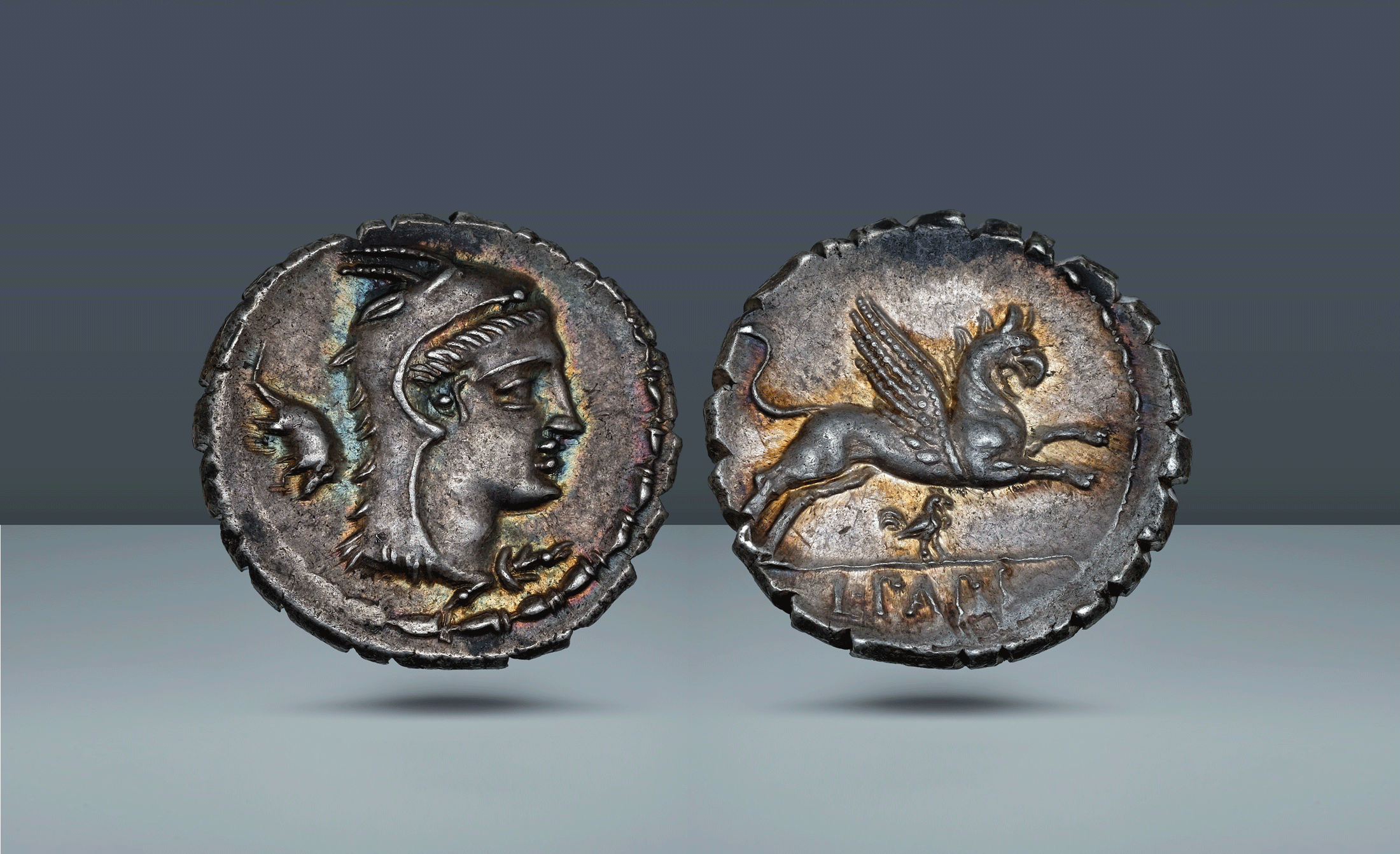
Roman Republic, Italy. L. Papius, Rome, c. 79 BC
AR Denarius serratus, 3.93g (18mm, 11h).
Head of Juno Sospita wearing a goat skin r.; behind, rat. Rev. Gryphon leaping r.; below, rooster. In exergue, L·PAPI
Pedigree: Ex Nomisma sale 72, 2025, 91.
References: Babelon Papia 1. Sydenham 773. RBW –. Crawford 384/1.
Grade: Arguably amongst the finest known. Beautiful strike and details with iridescent toning. Interesting and seldom encountered symbols. FDC
rr1403
Scroll down for more information about this coin.
In 79 BC, the moneyer L. Papius put a griffin on the reverse of his serrate denarius, springing right. Interestingly, no other historical details survive about the man. No career, no offices, no anecdotes.
The gens Papia came from the old Latin town Lanuvium in the Alban Hills, home of the great cult of Juno Sospita, "the Saviour." The griffin was the guardian beast of Greek lore: hoard-watcher, nest-defender, attacker of anyone who came too close. As such, its presence on the reverse of Papius’s denarius embodies a promise of protection. However, the griffin was never a fixed attribute of Juno Sospita. In fact, her actual cult animal was a serpent. That being said, Griffins do turn up in the decorative vocabulary of Latium's sanctuaries.
Interestingly, Papius's denarius is the only Republican coin where the griffin is the principal design element. It was instead often used in a similar fashion to the Greek Aegis shield. Roma was often depicted wearing a crested Corinthian helmet decorated with a griffin’s head and or wings. Another anonymous type (Crawford 182/1) places a small griffin control symbol below the Dioscuri.