
Roman Republic, Italy. Marcia L. Censorinus. Rome, c. 82 BC
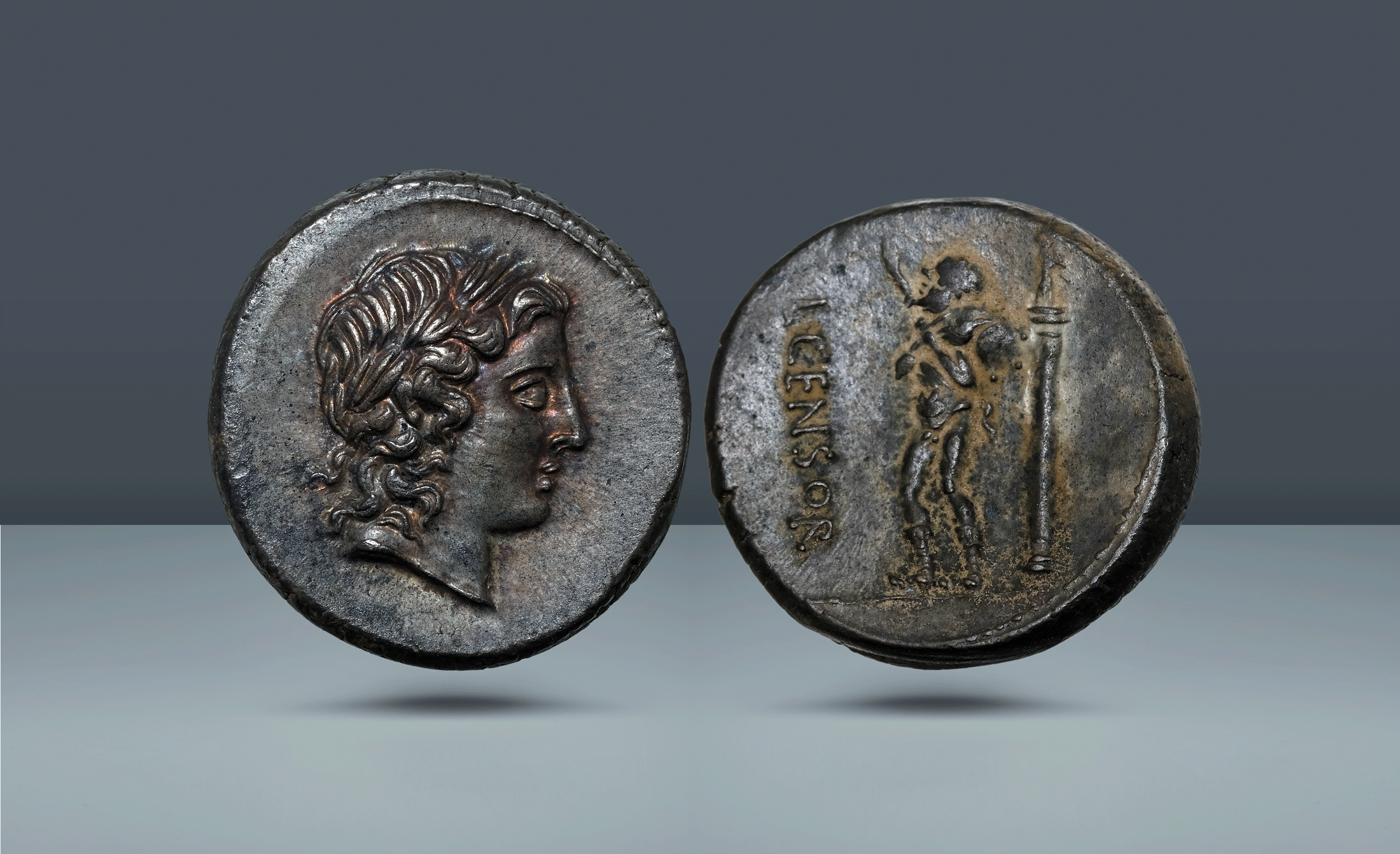
Roman Republic, Italy. Marcia L. Censorinus. Rome, c. 82 BC
AR Denarius, 4.00g (16.4mm, 3h)
Head of Apollo to r. /The satyr Marsyas
References: Cr. 363/1; RRSC D157d
Grade: Lovely dark toning. Sharp strike on obverse with attractive details. Reverse is nice but not fully struck. EF/aEF
rr1422
Scroll down for more information about this coin.
Marsyas was a satyr closely tied to the aulos, the double-reeded pipe. According to the most widespread version of the myth, Athena invented the instrument but threw it away after noticing that playing it distorted her face, and she cursed whoever should take it up. Marsyas found the pipes, mastered them, and grew confident enough to challenge Apollo, whose instrument was the lyre (or kithara), to a musical contest.
The details of the contest vary. In the account preserved by Diodorus Siculus, Apollo prevailed by playing his instrument while singing, or by inverting it, a feat impossible on a wind instrument. The Muses are often named as judges, and the victor was allowed to treat the loser as he wished. Apollo had Marsyas flayed alive and his skin hung from a tree. Herodotus and Xenophon both report that the skin was displayed at Celaenae, where a river bore the satyr's name. Ovid adds that the river arose from the tears of the nymphs, satyrs, and shepherds who mourned him.