
Attica, Athens. c. 454-404 BC
Attica, Athens. c. 454-404 BC
AR Tetradrachm, 17.19gm (23.5mm, 11h).
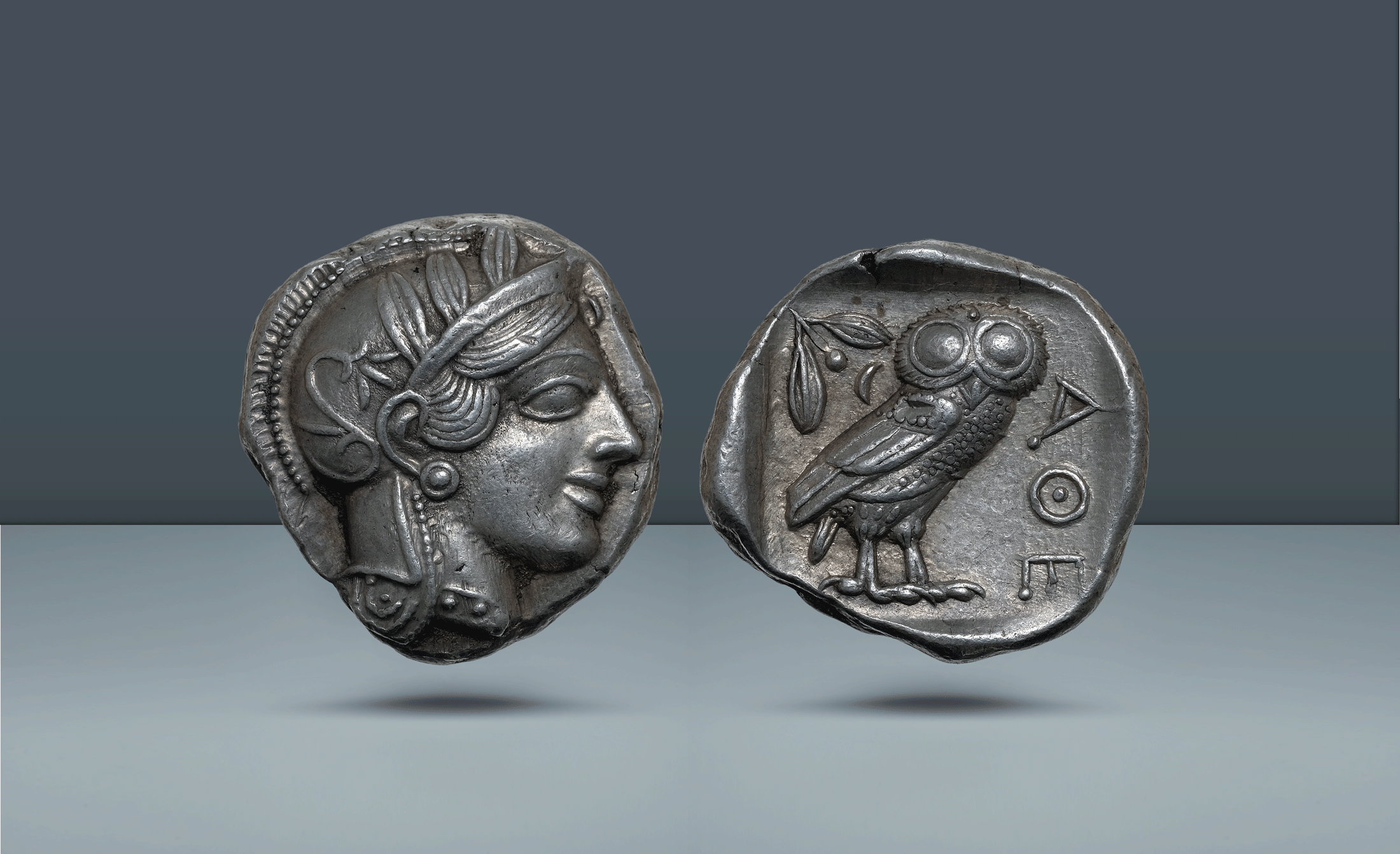
Head of Athena r., wearing crested Attic helmet decorated with palmette and floral motif, earring and necklace. / AΘΕ vertical to r., Owl standing r., head facing, olive branch and crescent to l., all within incuse square
References: Kroll 8; HGC IV.1597
Grade: Nicely toned and with good metal. Part of crest visible throughout. EF
gk2120
Scroll down for more information about this coin.
This classic Athenian “owl” tetradrachm belongs to the long-running series struck during the height of Athens’ power in the fifth century BC. These coins were produced on a massive scale as the city financed its naval empire and the building projects of the Periklean age, including the Parthenon on the Acropolis. Thanks to the wealth generated by the Laurion silver mines, Athenian tetradrachms became one of the most widely recognized and trusted currencies of the ancient Mediterranean.
The obverse depicts Athena, the city’s patron goddess, wearing her characteristic crested helmet adorned with a palmette and floral ornament. On the reverse appears the famous owl-Athena’s sacred bird-accompanied by an olive sprig, symbol of the prosperity and divine favor associated with the goddess. The ethnic AΘΕ abbreviates Athenaion, meaning “of the Athenians.”
These coins circulated far beyond Attica, serving as an international trade currency throughout the Greek world and the Near East. Their remarkably consistent design remained essentially unchanged for generations, a testament to the prestige and economic dominance of classical Athens.