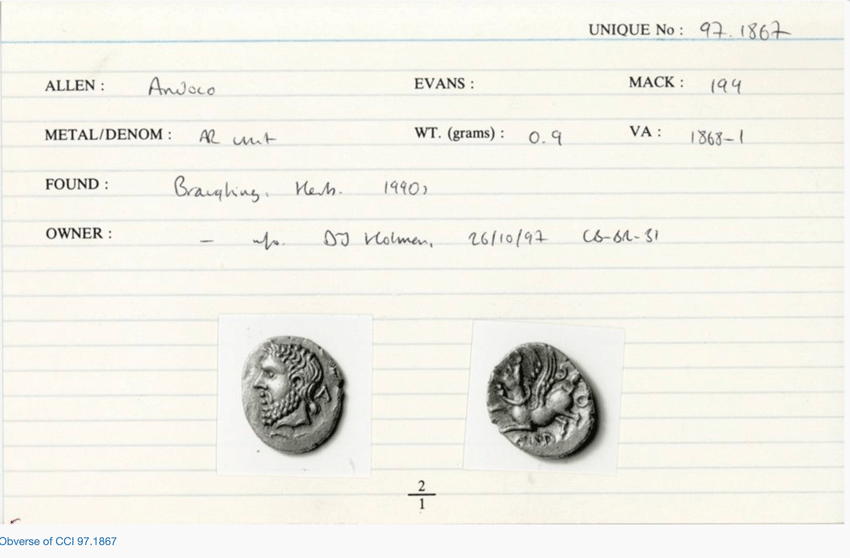
Celtic, Trinovantes & Catuvellauni. Andoco Pegasus type (Trinovantian Q). c. 10 BC - 10 AD
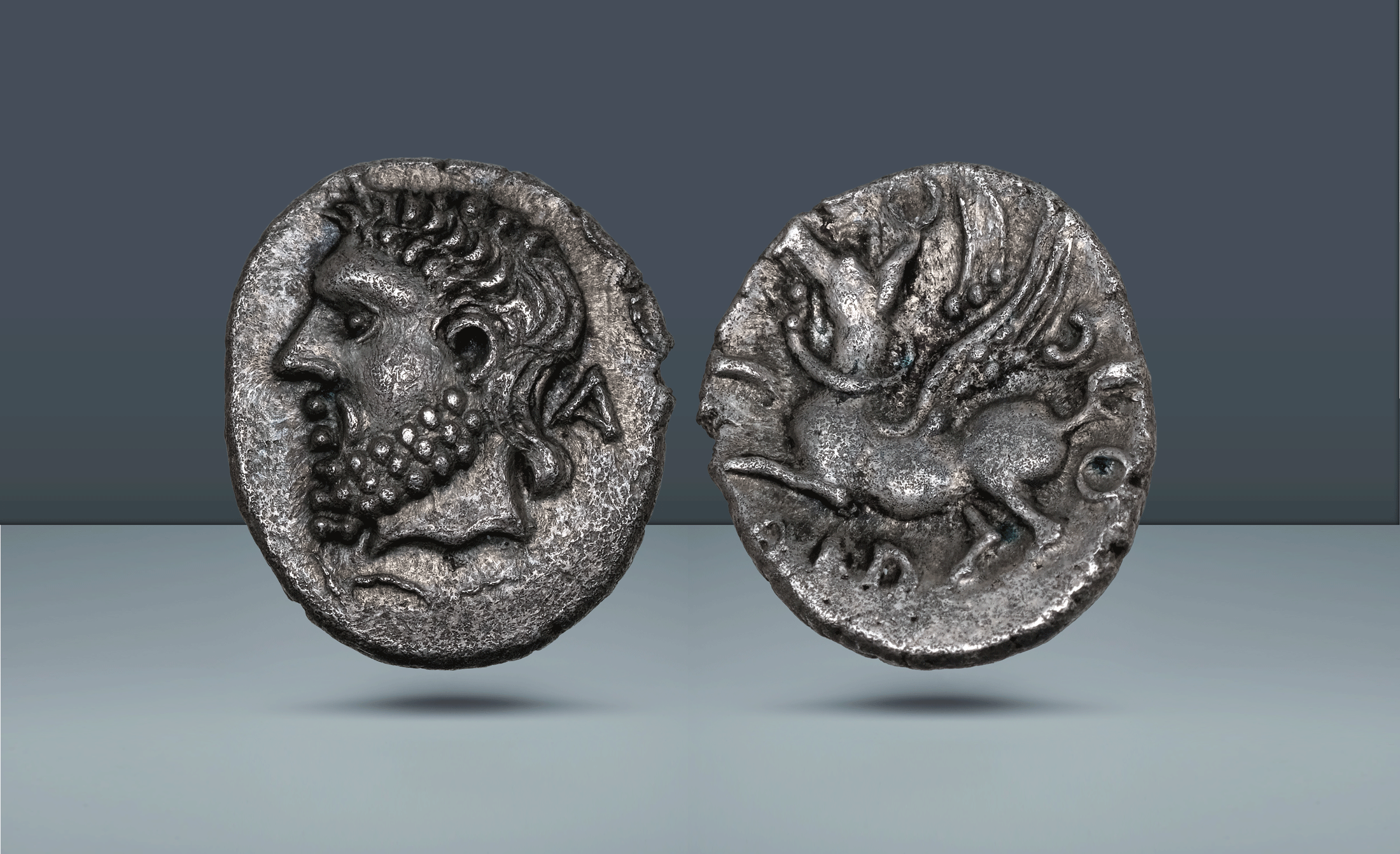
Celtic, Trinovantes & Catuvellauni. Andoco Pegasus type (Trinovantian Q). c. 10 BC - 10 AD
AR Unit, 0.90g (12mm, 1h)
Bearded head left, occ. A behind, interlaced lines for border / ANDOCO Mythical creature (winged horse) left, with reins
Pedigree: From the Chris Bailey Collection. Found Braughing, Hertfordshire, 1990s
References: Celtic Coin Index 97.1867 (this coin); Kretz, Problem fig. 4 (this coin illustrated); ABC 2721; Van Arsdell 1868-1; SCBC 264. Mack 199. Hobbs 2018
Grade: Light granularity. Near EF. Exceptional portrait. Very rare
gk2212
Scroll down for more information about this coin.
Julius Caesar's expeditions to Britain in 55 and 54 BC ended without conquest, but they changed the island all the same. In the generations that followed, the kingdoms of southeastern Britain drew steadily closer to the Roman world through trade, diplomacy, and the exchange of hostages and exiles, and nowhere is that shift more visible than on their coinage. Earlier British issues had reduced the horses and portraits of Greek prototypes to abstract patterns of pellets and crescents. By the turn of the millennium, the mints north of the Thames were producing coins with naturalistic portraits and classical motifs clearly modeled on Roman denarii and engraved gems. The Pegasus on this unit, a creature with no place in native British iconography, is a direct borrowing from that Mediterranean repertoire.
Andoco is among the more elusive figures of the period. He is known to history solely through his coins, which were issued in the lands of the Catuvellauni, the powerful tribe centered on the region around Verulamium (modern St Albans), and his precise relationship to better-documented rulers such as Tasciovanus and Cunobelinus remains a matter of scholarly discussion. The attribution of this Pegasus type, catalogued as Trinovantian Q, has itself been the subject of study, and this very coin is illustrated in Kretz's treatment of the problem and recorded in the Celtic Coin Index. Its findspot adds further interest. Braughing, in Hertfordshire, was one of the most important late Iron Age settlements in Britain, a center of trade and consumption that has yielded large quantities of imported Roman goods and native coinage, and it lay in the borderland where Catuvellaunian and Trinovantian interests met.