Mysia, Cyzicus. c. 440-400 BC
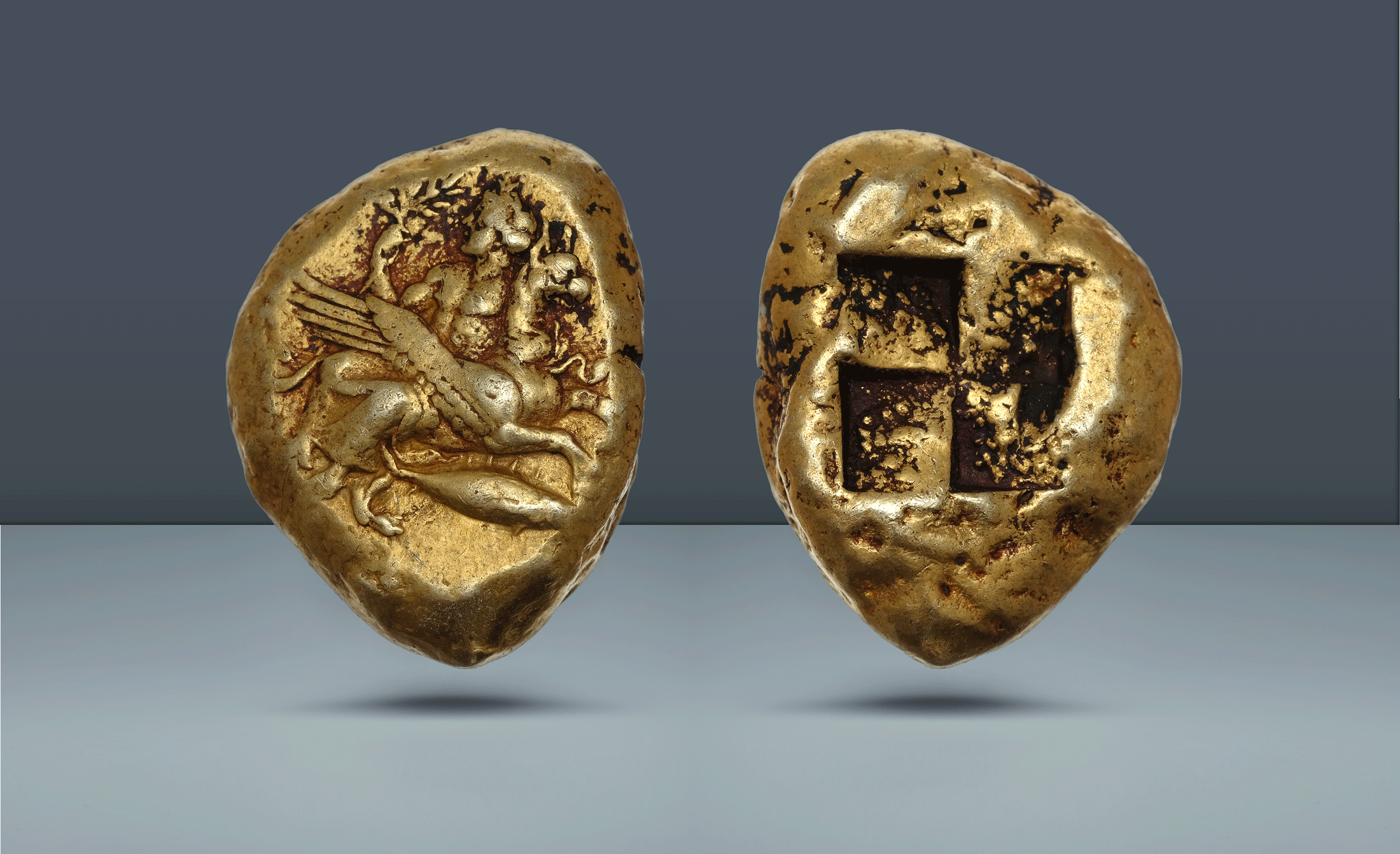
Mysia, Cyzicus. c. 440-400 BC
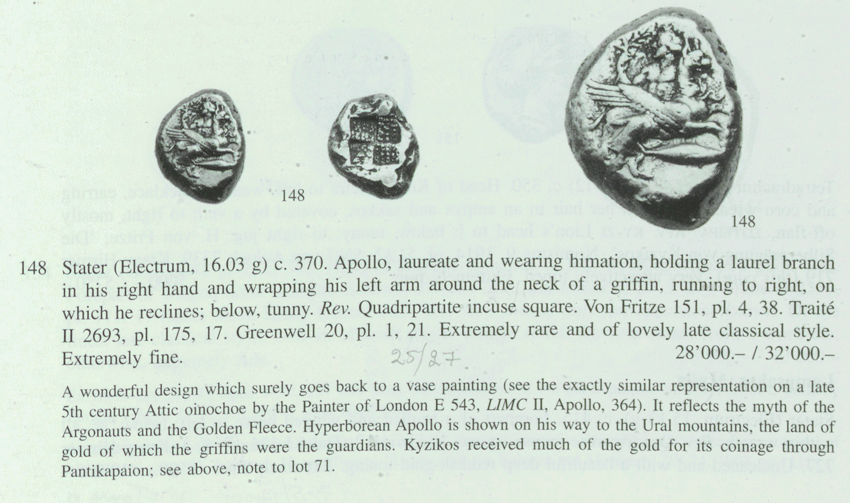
EL Stater, 16.03g (18mm, na).
Apollo, wearing himation, nude to waist, seated sideways on the back of a winged griffin with panther head; Apollo wrapping his l. arm around the neck of the griffin, holding a laurel branch in his raised r. hand; below, tunny r. / Four-part rude quadripartite incuse square with granulated interior fields
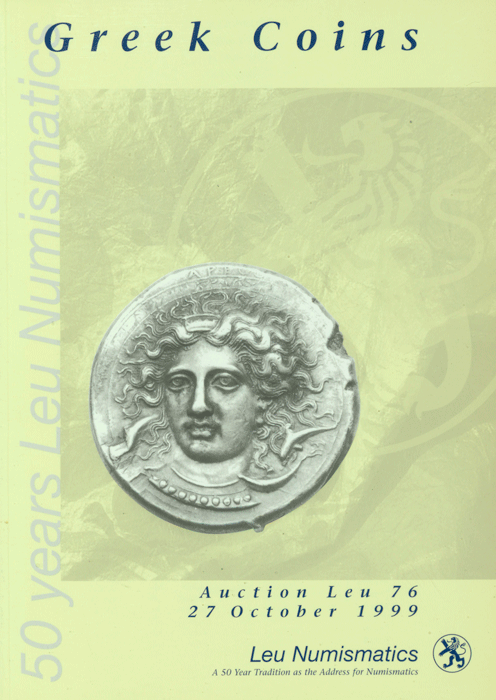
Pedigree: Leu Numismatics, Auction 76: Greek Coins, An Exceptional Private Collection, Zurich, 27 October 1999, lot 148
References: Von Fritze, Kyzikos 12, 151 and pl. IV, 38; Boston 201, 1545; Babelon, Traité pl. CLXXV, 17; cf. Leventopoulou, M. "Gryps," LIMC VIII.1 (1997), pp. 609–611, pls. 378–379
Grade: Extremely rare mythological type with a panther's head on the body of a griffin. Very complete for the issue and rare due to the myriad of Cyzicene types produced. Unobtrusive black encrustation in the crevices on the obverse. Mint State for issue
gk2184
Scroll down for more information about this coin.
Among the most captivating types in the celebrated Cyzicene electrum series, this stater presents Apollo in a moment of airborne grace, seated sideways astride a winged griffin whose foreparts terminate in the snarling head of a panther - a hybrid creature unique to the Cyzicus mint and one of the most imaginative die-engraving achievements of the Greek world. The panther-headed variant has genuine ancient precedent: Pausanias, writing in the 2nd century AD, records that griffins were said to have spots like the leopard (Description of Greece, 8.2.7), suggesting the type reflects a broader ancient association between griffins and spotted felines rather than a purely local engraver's invention. The god is rendered nude to the waist with his himation draped loosely about his lower body, his left arm curled affectionately around the griffin's neck for purchase while his raised right hand brandishes a laurel branch, Apollo's enduring attribute as god of prophecy and the Delphic cult. The tunny fish below - the mint's ubiquitous control symbol, referencing the tuna runs that made Cyzicus a hub of maritime wealth - anchors the scene firmly to its civic origin even as the composition soars into myth. The reverse retains the archaic four-part incuse square with granulated fields, a punch-type reverse that Cyzicus preserved long after other mints had abandoned it in favor of pictorial types - a deliberate conservatism, since modernizing the design risked compromising the hard-won trust the "Cyzicene" name carried in international trade.
The Cyzicene electrum stater served as the principal trade coin of Cyzicus from the late 7th through the late 4th century BC - a run of some three centuries as one of the ancient Mediterranean's most widely trusted currencies, so ubiquitous that ancient inscriptions referred to it simply by its shorthand nickname, the "Cyzicene," rather than by mint or type. Xenophon's Anabasis attests to the coin's role as military pay in the late 5th century, with soldiers promised a Cyzicene stater a month as an advance on wages, and Demosthenes (Against Phormio, 34.23) records its precise exchange value - one Cyzicene stater equal to 28 Athenian silver drachms - confirming both its high worth and its continued circulation into the mid-4th century, well after the Cyzicus mint itself had begun to wind down production. Their reach into the Black Sea and Bosporan world is corroborated by hoard evidence rather than by literary testimony alone. The Cyzicene's long dominance was eventually eclipsed by the gold stater of Philip II of Macedon, introduced in the mid-4th century BC specifically to displace older trade standards from the markets - a shift that also reflected gold's rising preference over alloyed electrum as the trust-standard for large-value international exchange. Their electrum content, alloyed and never fully standardized - a puzzle addressed at length in the 2012 Jerusalem "White Gold" conference on early electrum coinage - made them a coinage of trust rather than pure bullion value, trust vested in the mint's reputation and the sheer virtuosity of its engraving. The griffin-rider type, of which this coin is a fine example, belongs to a broader Cyzicene fascination with hybrid and fantastical creatures pressed into service as vehicles for the godess, echoing similar Dionysiac and Herculean panther/griffin imagery found elsewhere in the series