
Phoenicia, Tyre. 107-106 BC
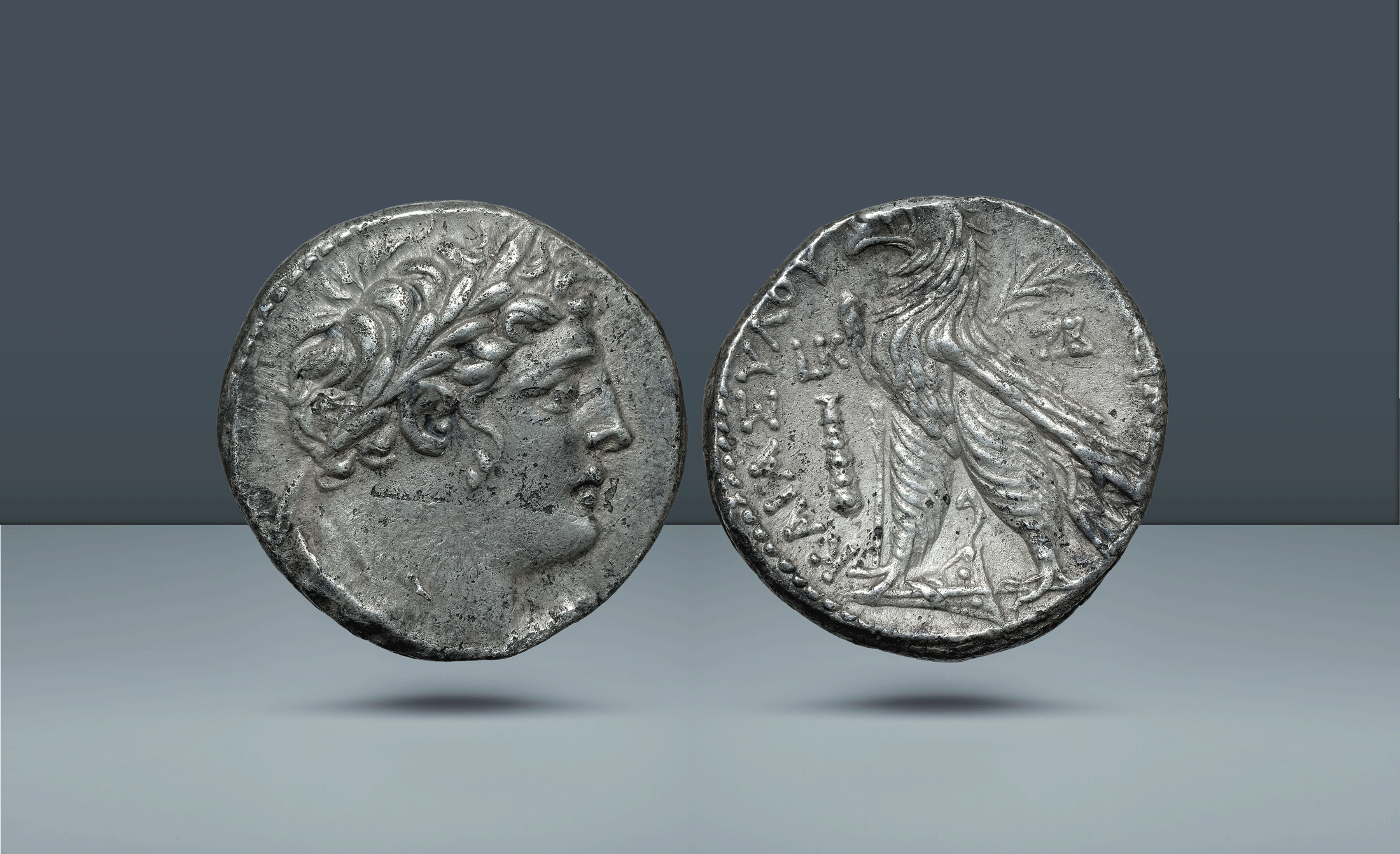
Phoenicia, Tyre. 107-106 BC
AR Shekel,14.11g(27.00mm, ).
Bust of Melqart r., wearing laurel wreath and lion's skin around neck. Rev. Eagle standing l. on prow, palm frond over r. wing; to l., LK (date) above club; ZB to r., Phoenician A between legs.
References: HGC 10, 357. DCA p. 502. BMC Phoenicia 91.
Grade: Spots of corrosion and black speckles. VF
gk2156
Scroll down for more information about this coin.
One of the great mercantile coinages of the ancient Mediterranean, the shekel of Tyre represents the sophisticated economic machinery of a city that controlled maritime trade for centuries. This example presents the classical Tyrian reverse type in its most iconic form: the eagle-symbol of Ptolemaic legitimacy and Phoenician maritime supremacy-stands leftward upon the galley's prow, its wings spread protectively above the palm frond, an emblem of Phoenician identity. To the left, the date formula LK and the symbol of the club frame the composition; to the right, the letters ZB with the Phoenician A between the eagle's legs anchor the reverse in local tradition and administrative practice.
The obverse preserves a commanding portrait of Melqart, the tutelary deity of Tyre, rendered in the mature Hellenistic style with idealized features and a lion's skin draped across the god's shoulders-a reference to the Herculean aspects of this Phoenician Herakles. The laurel wreath signifies divine honor and the peaceful prosperity under Seleucid rule.
The shekel of Tyre transcends its role as a standard of Levantine commerce to assume profound religious significance in Jewish practice. The Temple tax, prescribed in Exodus and collected annually from all adult male Jews, required payment in shekels of the sanctuary-a standard that the Tyrian shekel came to fulfill. The high purity of Tyrian silver, the weight consistency maintained across decades, and the coin's universal acceptance made it the preferred medium for this obligation. These coins circulated in vast quantities through Jerusalem and Judea, connecting the commercial networks of the Hellenistic world to the religious life of the Jewish people. The present example, though worn from circulation, preserves the dignity of a coin that served both merchant and pilgrim.