
Sicily, Syracuse. Hieron II in the name of Queen Philistis, 274-216 BC , c. 274 BC
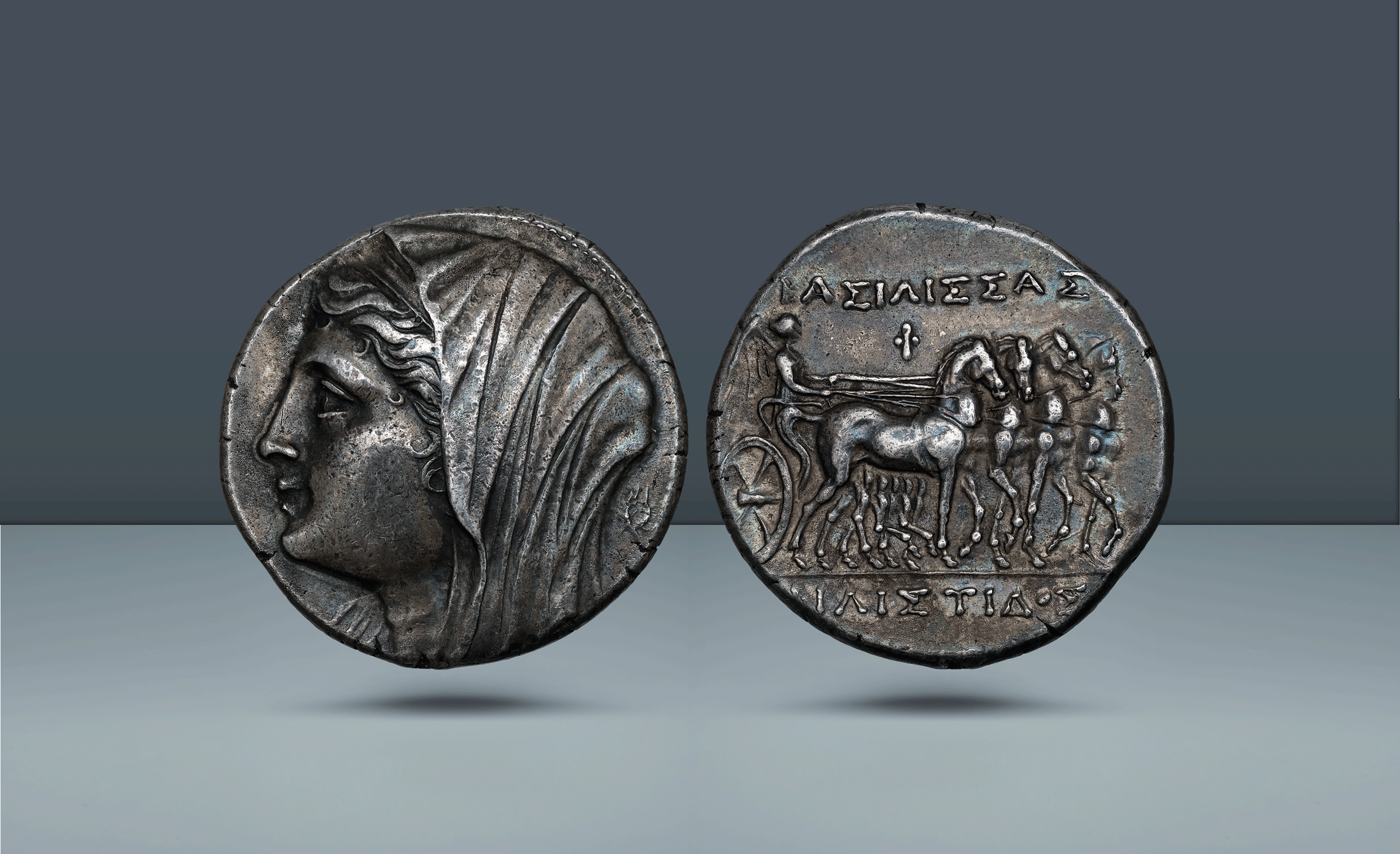
Sicily, Syracuse. Hieron II in the name of Queen Philistis, 274-216 BC , c. 274 BC
AR 16 Litrai, 13.5g (26mm, 12h).
Diademed and veiled head of Philistis l., behind, wreath. / BAΣIΛIΣΣAΣ - ΦIΛIΣIΔOΣ Nike, with open wings and wearing chiton, driving slow quadriga r., holding the reins with both her hands; above, Φ
Pedigree: From an old Swiss collection started in the 19th century
References: Caltabiano/Carroccio/Oteri 170, 164 (these dies); SNG ANS 872.
Grade: Light overall wear. Cabinet toning with some luster. Toned EF
gk2177
Scroll down for more information about this coin.
Syracuse was, by the third century BCE, perhaps the richest Greek city in the western Mediterranean. Despite the city's wealth and fame, one of its most intriguing figures is a woman the ancient historians barely mention. Queen Philistis, wife of Hieron II (r. c. 270–215 BCE), survives almost entirely through her coins and a single rock cut inscription. Even her background is guesswork. Polybius says Hieron married the daughter of a prominent Syracusan named Leptines, and the name Philistis points toward the family of the historian Philistus and the court circle of Dionysius I. For Hieron, an officer of humble origins who took power in a coup, the marriage was smart politics, grafting his upstart regime onto the city's most prestigious bloodline.
Syracuse struck an extensive series of coinage in her name. This particular coin, a handsome 16-litrai, depicts her in the refined style that made the Syracusan mint famous opposite the reverse legend ΒΑΣΙΛΙΣΣΑΣ ΦΙΛΙΣΤΙΔΟΣ or "of Queen Philistis". In this period, coinage struck for a living queen was still a novelty. The model was plainly Ptolemaic Egypt, where Arsinoe II had pioneered the type. Hieron had close ties with Alexandria, and this was clearly a political statement: Syracuse wanted to be read as a Hellenistic monarchy of the first rank. Her other monument is located in the grand city theater. When Hieron rebuilt the structure, each seating area was dedicated with a monumental inscription. The gods were located at the center, with the royal family around them. Philistis’s name is still legible, and they confirm her formal title of ΒΑΣΙΛΙΣΣΑ.