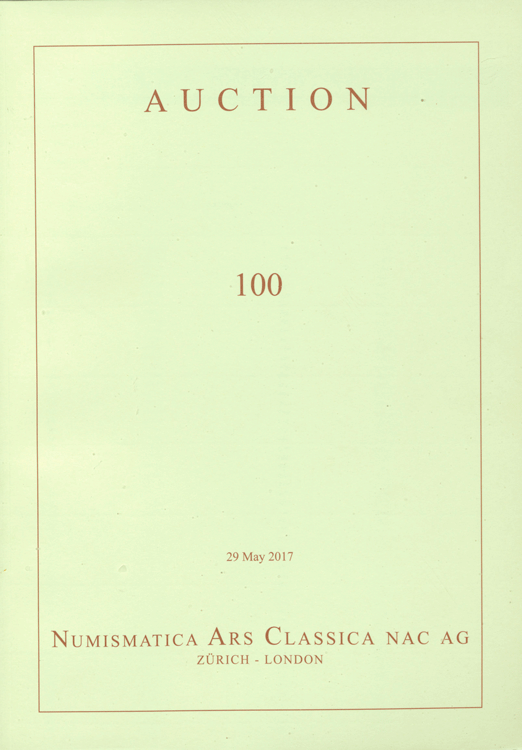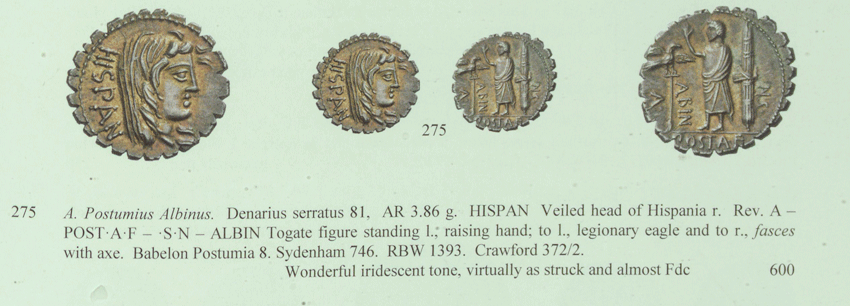
Roman Republic, Italy. A. Postumius Albinus. Rome, c. 81 BC
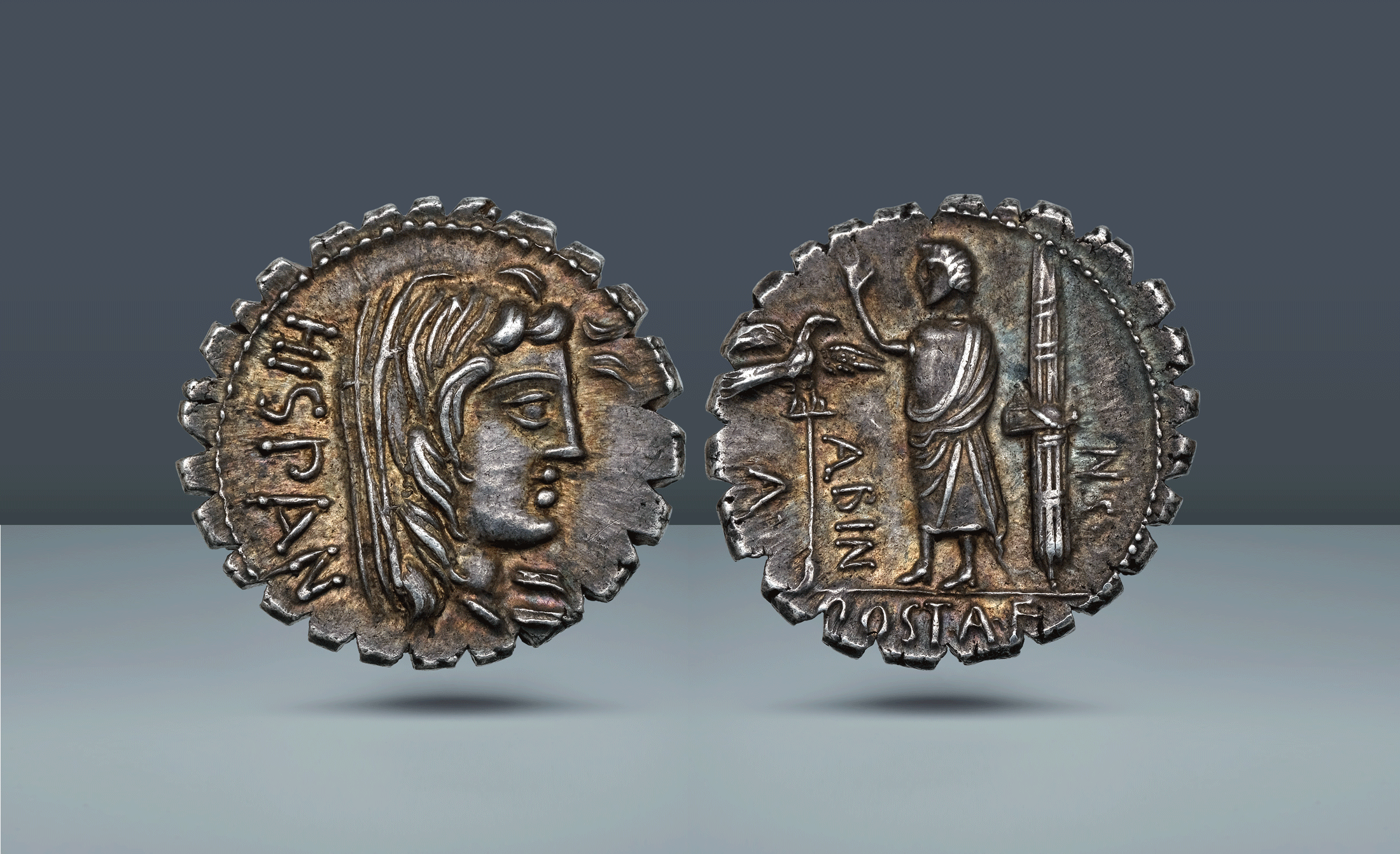
Roman Republic, Italy. A. Postumius Albinus. Rome, c. 81 BC
AR Seratte Denarius, 4.03g (20mm, 1h)
HISPAN Veiled head of Hispania to r. / A – POST·A·F – ·S·N – ALBIN. Togate figure standing to l., raising hand; to l., legionary eagle and fasces with axe to r.
Pedigree: Ex NAC 100, Zurich, 29 May 2017, lot 275
References: Craw 372/2; Syd 746
Grade: Lovely iridescent toning and sharp strike. Beautiful and Mint State
rr1412
Scroll down for more information about this coin.
This silver denarius was struck in Rome around 81 BC and is one of the earliest Roman coins to label a province as a personified figure. The obverse shows a veiled, draped woman with the legend HISPAN behind her. On the reverse, a man in a toga raises his right hand between a legionary eagle and a fasces.
The moneyer, Aulus Postumius Albinus, used Hispania to remind his fellow citizens what his family had done in Spain about a century earlier. His ancestor L. Postumius Albinus served as praetor there around 180 BC, fought the Lusitanians and Vaccaei, and celebrated a triumph in 178 BC.
The two faces are meant to be read together: Hispania on one, the symbols of Roman authority on the other. Hispania appears veiled and composed, nothing like the wild barbarians Romans often used for foreign peoples, which suggests a land already settled and ready for Roman government. Some scholars connect the veil to Iberian dress, citing Strabo's description of Iberian women in tall veiled headdresses; others read it as a gesture of submission. These readings can coexist. Labelling the bust HISPAN was also unusual for the period. It treats a whole province as something that could be named and pictured as one figure, as later Roman art would do routinely.
The date makes the coin more pointed. In 81 BC Sulla controlled Rome, while Spain was held by Quintus Sertorius, a supporter of Marius. Sulla's forces drove him out that year, but he returned in 80 BC and held much of Spain for close to a decade. Against that background, a calm, orderly Hispania may also have supported the Sullan regime's claim that the province was firmly under Roman control.